
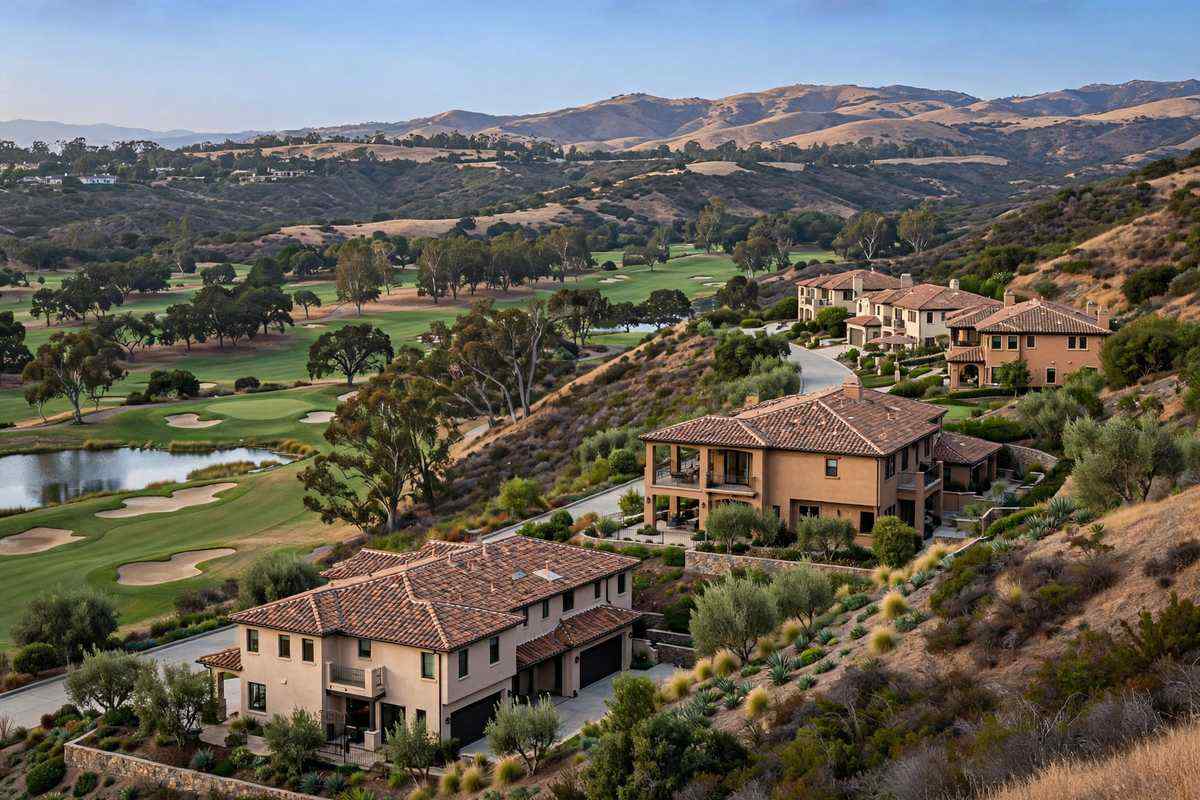
Wood Ranch homes are 1980s and 1990s master-planned hillside homes, and their material choice is shaped by tile weight, ridgeline wind and wildland-urban interface detailing, not by price alone.
Best roofing materials for Wood Ranch homes
Tile suits the Wood Ranch profile and street, but its underlayment is the part that ages first, so a Wood Ranch tile decision is also a lift-and-relay decision in time. Shingle suits a lower-slope or budget-led replacement, and metal suits a long-life, non-combustible brief on a suitable home.
For a single-family re-roof in CEC Climate Zone 9, the Title 24 Part 6 prescriptive cool-roof values are an aged solar reflectance of at least 0.20 with thermal emittance of at least 0.75, or an SRI of at least 16, on steep slopes of 2:12 or more, and at least 0.63 with emittance of at least 0.75, or an SRI of at least 75, on low slopes under 2:12. That requirement is triggered when more than 50 percent of the roof area is replaced, which is a different threshold from the City permit trigger, and the parcel's zone should be checked with the CEC zone finder before a product is specified.
Simi Valley contains High and Very High Fire Hazard Severity Zone parcels, but it is not correct to say that all of Simi Valley is Very High. The parcel's zone must be checked in the CAL FIRE / VCFD Fire Hazard Severity Zone viewer, and on a wildland-urban interface parcel the current citation is Title 24 Part 7, the California Wildland-Urban Interface Code, not the retired CBC Chapter 7A. On such a parcel a Class A fire-rated roof assembly is required.
What makes Wood Ranch different for roofing
Published regional market ranges include architectural asphalt at $550 to $900 per square and tile re-lay at $900 to $1,600 per square in a Torrance / South Bay 2026 guide, and California repair work most commonly at $450 to $3,200 in a Modernize guide updated 26 August 2026. One square is 100 square feet of roof surface, not floor area, and a written estimate follows inspection of the actual roof.
Wood Ranch homes are 1980s and 1990s master-planned hillside homes, and their material choice is shaped by tile weight, ridgeline wind and wildland-urban interface detailing, not by price alone.
- Heat cycling. Roofs here expand and contract 60 to 70 degrees between a July afternoon and a January night. Materials that crack under that cycle - cheap three-tab shingles, thin underlayment - fail early.
- Wind exposure. The foothill edge of Wood Ranch takes gusts that peel improperly nailed shingles and lift unsealed tile edges.
- Fire rating. California's Wildland-Urban Interface code requires Class A assemblies on most homes in and around the Wood Ranch corridor. Wood shake is effectively off the table for new installs.
Tile suits the Wood Ranch profile and street, but its underlayment is the part that ages first, so a Wood Ranch tile decision is also a lift-and-relay decision in time. Shingle suits a lower-slope or budget-led replacement, and metal suits a long-life, non-combustible brief on a suitable home.
What is the best roofing material for Wood Ranch homes in CA?
Work is planned around Simi Valley heat, winter rain and Santa Ana wind.
Clay and concrete tile
For a single-family re-roof in CEC Climate Zone 9, the Title 24 Part 6 prescriptive cool-roof values are an aged solar reflectance of at least 0.20 with thermal emittance of at least 0.75, or an SRI of at least 16, on steep slopes of 2:12 or more, and at least 0.63 with emittance of at least 0.75, or an SRI of at least 75, on low slopes under 2:12. That requirement is triggered when more than 50 percent of the roof area is replaced, which is a different threshold from the City permit trigger, and the parcel's zone should be checked with the CEC zone finder before a product is specified.
Simi Valley contains High and Very High Fire Hazard Severity Zone parcels, but it is not correct to say that all of Simi Valley is Very High. The parcel's zone must be checked in the CAL FIRE / VCFD Fire Hazard Severity Zone viewer, and on a wildland-urban interface parcel the current citation is Title 24 Part 7, the California Wildland-Urban Interface Code, not the retired CBC Chapter 7A. On such a parcel a Class A fire-rated roof assembly is required.
Asphalt shingles
Published regional market ranges include architectural asphalt at $550 to $900 per square and tile re-lay at $900 to $1,600 per square in a Torrance / South Bay 2026 guide, and California repair work most commonly at $450 to $3,200 in a Modernize guide updated 26 August 2026. One square is 100 square feet of roof surface, not floor area, and a written estimate follows inspection of the actual roof.
Wood Ranch homes are 1980s and 1990s master-planned hillside homes, and their material choice is shaped by tile weight, ridgeline wind and wildland-urban interface detailing, not by price alone.
Standing-seam metal
Tile suits the Wood Ranch profile and street, but its underlayment is the part that ages first, so a Wood Ranch tile decision is also a lift-and-relay decision in time. Shingle suits a lower-slope or budget-led replacement, and metal suits a long-life, non-combustible brief on a suitable home.
Your roof is checked as a whole system: deck, underlayment, flashing and drainage.
Tile and synthetic slate
For a single-family re-roof in CEC Climate Zone 9, the Title 24 Part 6 prescriptive cool-roof values are an aged solar reflectance of at least 0.20 with thermal emittance of at least 0.75, or an SRI of at least 16, on steep slopes of 2:12 or more, and at least 0.63 with emittance of at least 0.75, or an SRI of at least 75, on low slopes under 2:12. That requirement is triggered when more than 50 percent of the roof area is replaced, which is a different threshold from the City permit trigger, and the parcel's zone should be checked with the CEC zone finder before a product is specified.
How much do roofing materials cost in Wood Ranch Simi Valley?
Simi Valley contains High and Very High Fire Hazard Severity Zone parcels, but it is not correct to say that all of Simi Valley is Very High. The parcel's zone must be checked in the CAL FIRE / VCFD Fire Hazard Severity Zone viewer, and on a wildland-urban interface parcel the current citation is Title 24 Part 7, the California Wildland-Urban Interface Code, not the retired CBC Chapter 7A. On such a parcel a Class A fire-rated roof assembly is required.
Published regional market ranges include architectural asphalt at $550 to $900 per square and tile re-lay at $900 to $1,600 per square in a Torrance / South Bay 2026 guide, and California repair work most commonly at $450 to $3,200 in a Modernize guide updated 26 August 2026. One square is 100 square feet of roof surface, not floor area, and a written estimate follows inspection of the actual roof.
- Architectural shingle: $19,000 to $27,000
- Concrete or clay tile: $34,000 to $52,000
- Standing-seam metal: $46,000 to $68,000
- Synthetic slate: $38,000 to $58,000
Wood Ranch homes are 1980s and 1990s master-planned hillside homes, and their material choice is shaped by tile weight, ridgeline wind and wildland-urban interface detailing, not by price alone.
Tile suits the Wood Ranch profile and street, but its underlayment is the part that ages first, so a Wood Ranch tile decision is also a lift-and-relay decision in time. Shingle suits a lower-slope or budget-led replacement, and metal suits a long-life, non-combustible brief on a suitable home.
Which roof lasts longest in Wood Ranch California?
Call (805) 669-9300 to arrange an inspection and a written estimate.
For a single-family re-roof in CEC Climate Zone 9, the Title 24 Part 6 prescriptive cool-roof values are an aged solar reflectance of at least 0.20 with thermal emittance of at least 0.75, or an SRI of at least 16, on steep slopes of 2:12 or more, and at least 0.63 with emittance of at least 0.75, or an SRI of at least 75, on low slopes under 2:12. That requirement is triggered when more than 50 percent of the roof area is replaced, which is a different threshold from the City permit trigger, and the parcel's zone should be checked with the CEC zone finder before a product is specified.
- Metal: roughly $1,000 per year over 50 years
- Tile: roughly $900 per year over 45 years
- Architectural shingle: roughly $1,000 per year over 22 years, plus a second replacement in year 23
Simi Valley contains High and Very High Fire Hazard Severity Zone parcels, but it is not correct to say that all of Simi Valley is Very High. The parcel's zone must be checked in the CAL FIRE / VCFD Fire Hazard Severity Zone viewer, and on a wildland-urban interface parcel the current citation is Title 24 Part 7, the California Wildland-Urban Interface Code, not the retired CBC Chapter 7A. On such a parcel a Class A fire-rated roof assembly is required.
What to watch out for on Wood Ranch roofs
Published regional market ranges include architectural asphalt at $550 to $900 per square and tile re-lay at $900 to $1,600 per square in a Torrance / South Bay 2026 guide, and California repair work most commonly at $450 to $3,200 in a Modernize guide updated 26 August 2026. One square is 100 square feet of roof surface, not floor area, and a written estimate follows inspection of the actual roof.
- Skipping the deck inspection. On a 25-year-old Wood Ranch roof, we routinely find soft sheathing around chimneys and skylights. If the deck is not repaired before the new covering goes on, the new roof inherits the old problem.
- Ignoring attic ventilation. A hot Simi Valley attic with inadequate intake and exhaust vents cooks the underside of your roof deck. We have measured attic temps above 150°F on homes with blocked soffit vents. That shortens shingle life by years.
- Reusing old flashing. Chimney and sidewall flashing is where most leaks start. New roof, old flashing is a callback waiting to happen.
- Picking dark colors. A charcoal shingle roof looks great in the showroom and bakes in August. Lighter tones measurably reduce attic heat load here.
- Not checking the HOA. Wood Ranch has architectural guidelines. Get material and color approval before you sign a contract, not after the pallets show up.
Wood Ranch homes are 1980s and 1990s master-planned hillside homes, and their material choice is shaped by tile weight, ridgeline wind and wildland-urban interface detailing, not by price alone.
When to call a professional
Tile suits the Wood Ranch profile and street, but its underlayment is the part that ages first, so a Wood Ranch tile decision is also a lift-and-relay decision in time. Shingle suits a lower-slope or budget-led replacement, and metal suits a long-life, non-combustible brief on a suitable home.
Every job starts with an inspection and a written scope before any work begins.
For a single-family re-roof in CEC Climate Zone 9, the Title 24 Part 6 prescriptive cool-roof values are an aged solar reflectance of at least 0.20 with thermal emittance of at least 0.75, or an SRI of at least 16, on steep slopes of 2:12 or more, and at least 0.63 with emittance of at least 0.75, or an SRI of at least 75, on low slopes under 2:12. That requirement is triggered when more than 50 percent of the roof area is replaced, which is a different threshold from the City permit trigger, and the parcel's zone should be checked with the CEC zone finder before a product is specified.
Frequently Asked Questions
What is the best roofing material for Wood Ranch homes in CA?
Simi Valley contains High and Very High Fire Hazard Severity Zone parcels, but it is not correct to say that all of Simi Valley is Very High. The parcel's zone must be checked in the CAL FIRE / VCFD Fire Hazard Severity Zone viewer, and on a wildland-urban interface parcel the current citation is Title 24 Part 7, the California Wildland-Urban Interface Code, not the retired CBC Chapter 7A. On such a parcel a Class A fire-rated roof assembly is required.
How much do roofing materials cost in Wood Ranch Simi Valley?
Published regional market ranges include architectural asphalt at $550 to $900 per square and tile re-lay at $900 to $1,600 per square in a Torrance / South Bay 2026 guide, and California repair work most commonly at $450 to $3,200 in a Modernize guide updated 26 August 2026. One square is 100 square feet of roof surface, not floor area, and a written estimate follows inspection of the actual roof.
Which roof lasts longest in Wood Ranch California?
Wood Ranch homes are 1980s and 1990s master-planned hillside homes, and their material choice is shaped by tile weight, ridgeline wind and wildland-urban interface detailing, not by price alone.
What roofing materials are popular in Wood Ranch CA?
Tile suits the Wood Ranch profile and street, but its underlayment is the part that ages first, so a Wood Ranch tile decision is also a lift-and-relay decision in time. Shingle suits a lower-slope or budget-led replacement, and metal suits a long-life, non-combustible brief on a suitable home.
Can I install a wood shake roof in Wood Ranch?
We show you what we find, explain the options, and agree the scope in writing.
Get help with Roofing in Simi Valley
For a single-family re-roof in CEC Climate Zone 9, the Title 24 Part 6 prescriptive cool-roof values are an aged solar reflectance of at least 0.20 with thermal emittance of at least 0.75, or an SRI of at least 16, on steep slopes of 2:12 or more, and at least 0.63 with emittance of at least 0.75, or an SRI of at least 75, on low slopes under 2:12. That requirement is triggered when more than 50 percent of the roof area is replaced, which is a different threshold from the City permit trigger, and the parcel's zone should be checked with the CEC zone finder before a product is specified.
Simi Valley contains High and Very High Fire Hazard Severity Zone parcels, but it is not correct to say that all of Simi Valley is Very High. The parcel's zone must be checked in the CAL FIRE / VCFD Fire Hazard Severity Zone viewer, and on a wildland-urban interface parcel the current citation is Title 24 Part 7, the California Wildland-Urban Interface Code, not the retired CBC Chapter 7A. On such a parcel a Class A fire-rated roof assembly is required.