


Photo report
Santa Ana gusts in Simi Valley have been recorded at 62 mph, as on 4-5 October 2013.
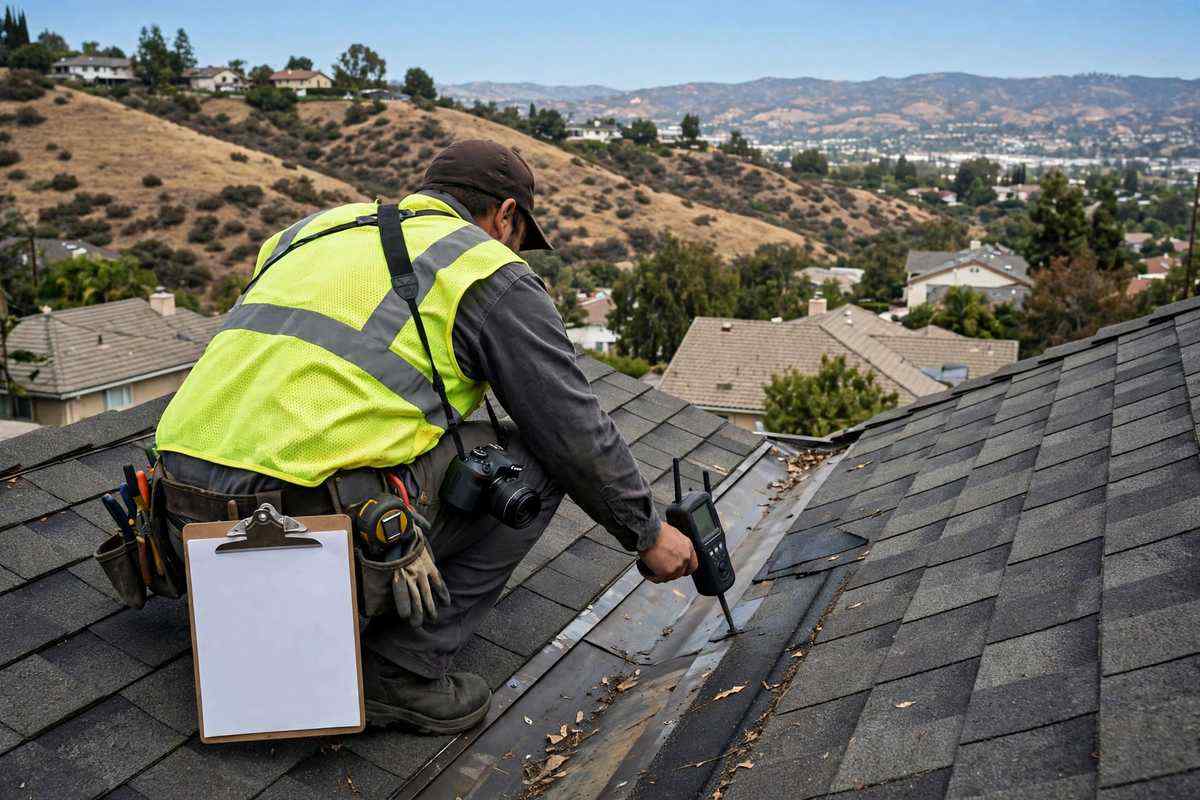
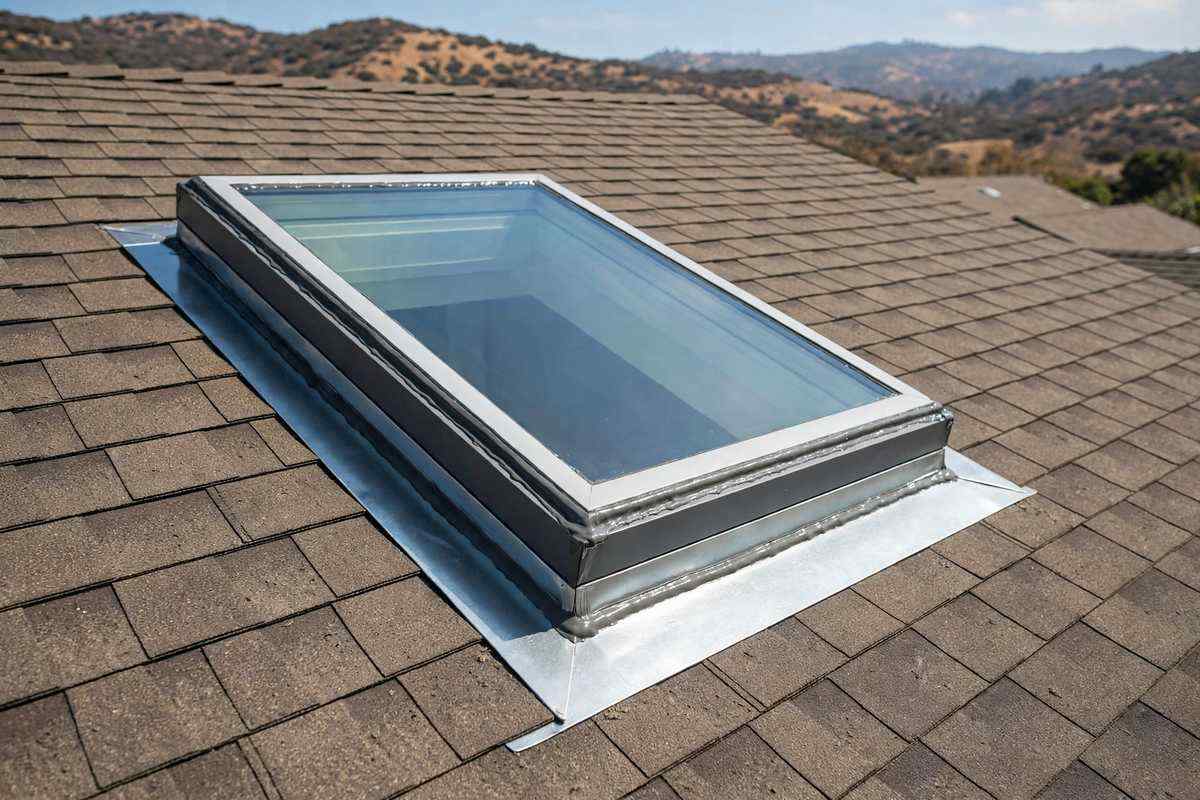
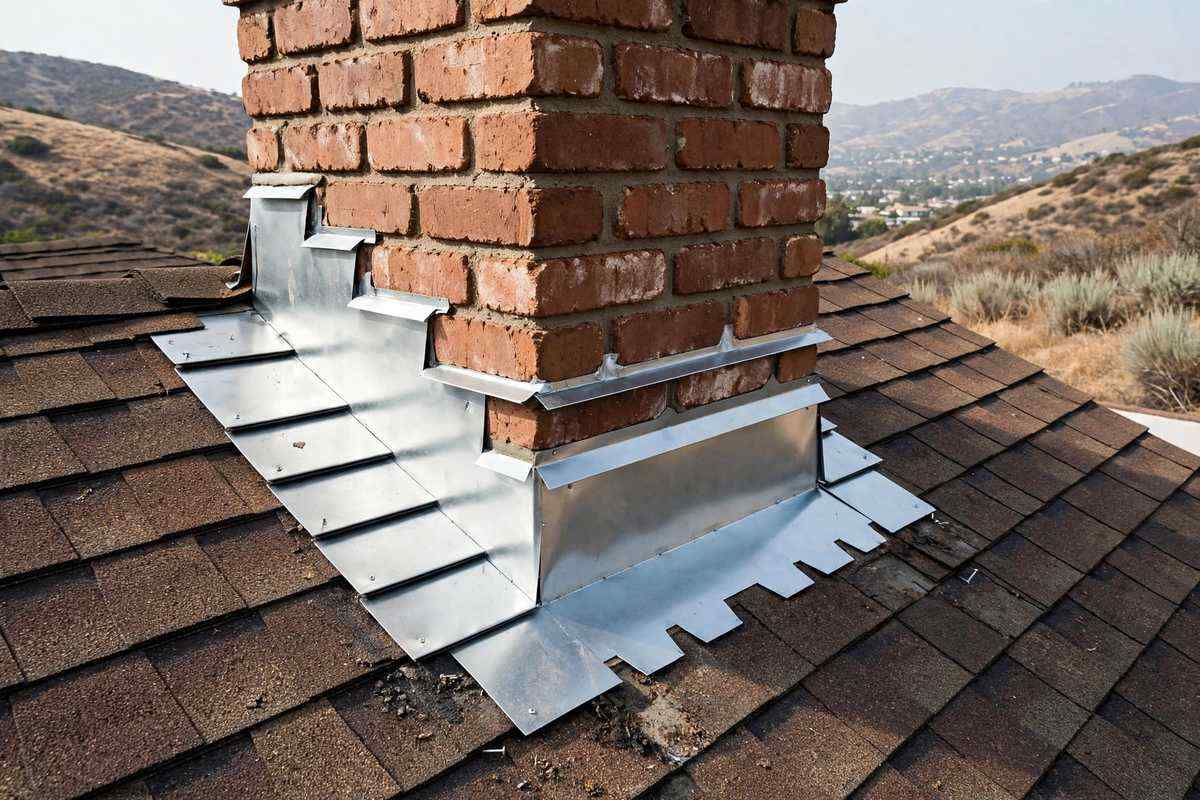
A roof leak in Simi Valley is usually found by tracing water, not by looking above the stain. Valleys, wall and chimney flashings, pipe boots, skylight curbs and tile underlayment are checked in that order, because water travels before it drips.
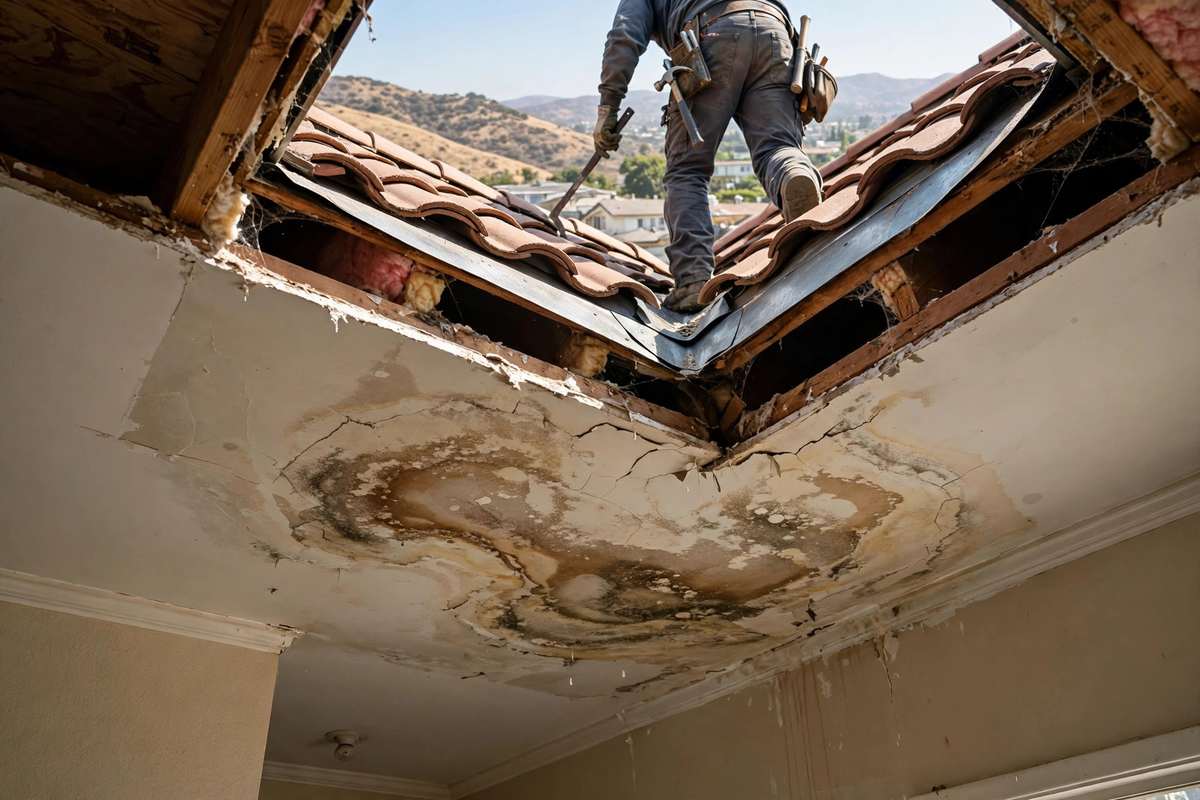
The most common Simi Valley leak pattern is not a broken tile alone: it is underlayment that has aged out under otherwise sound tile, flashing that has opened after a dry summer, or a dried and split pipe boot.
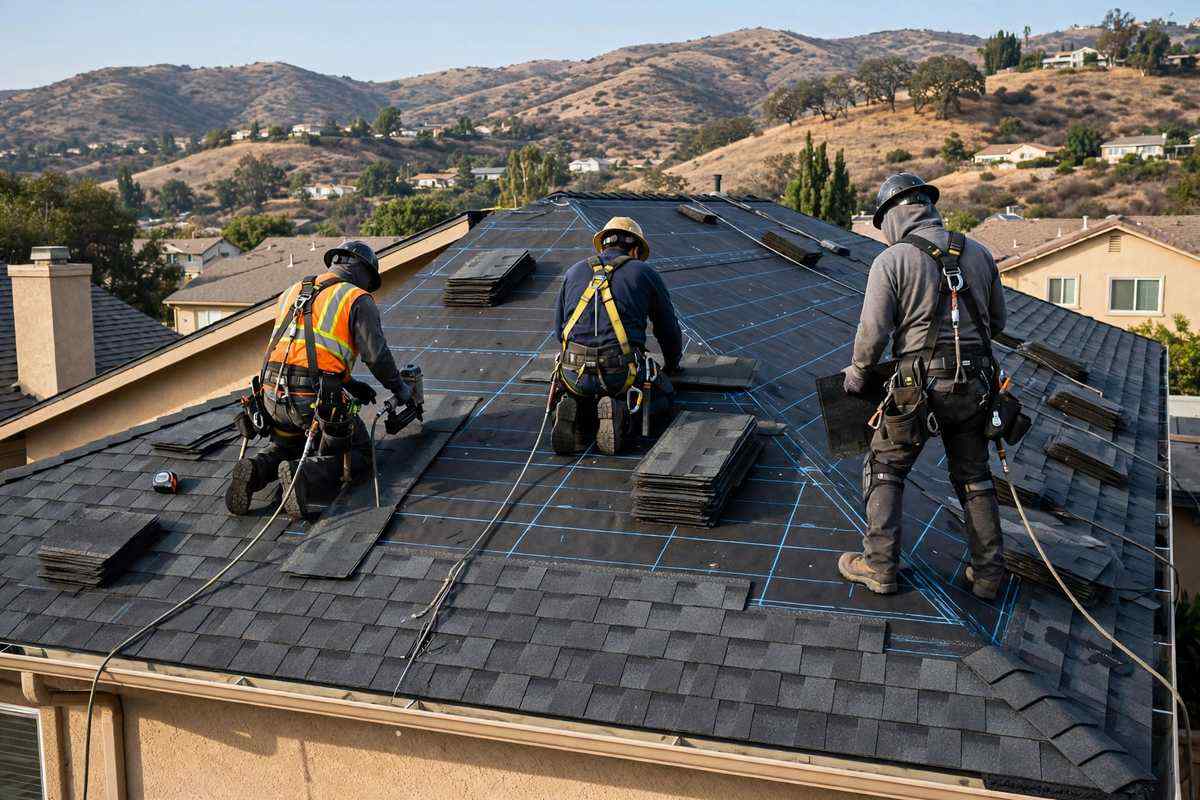
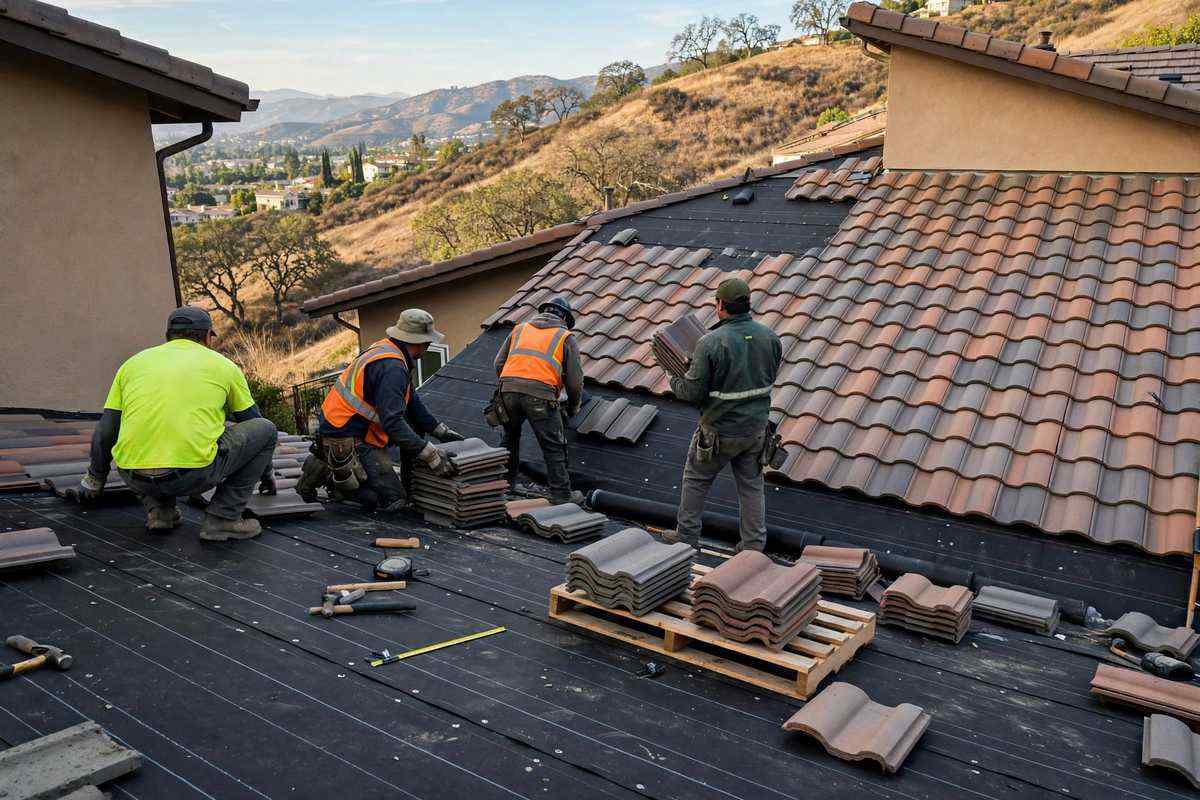
The most common Simi Valley leak pattern is not a broken tile alone: it is underlayment that has aged out under otherwise sound tile, flashing that has opened after a dry summer, or a dried and split pipe boot.
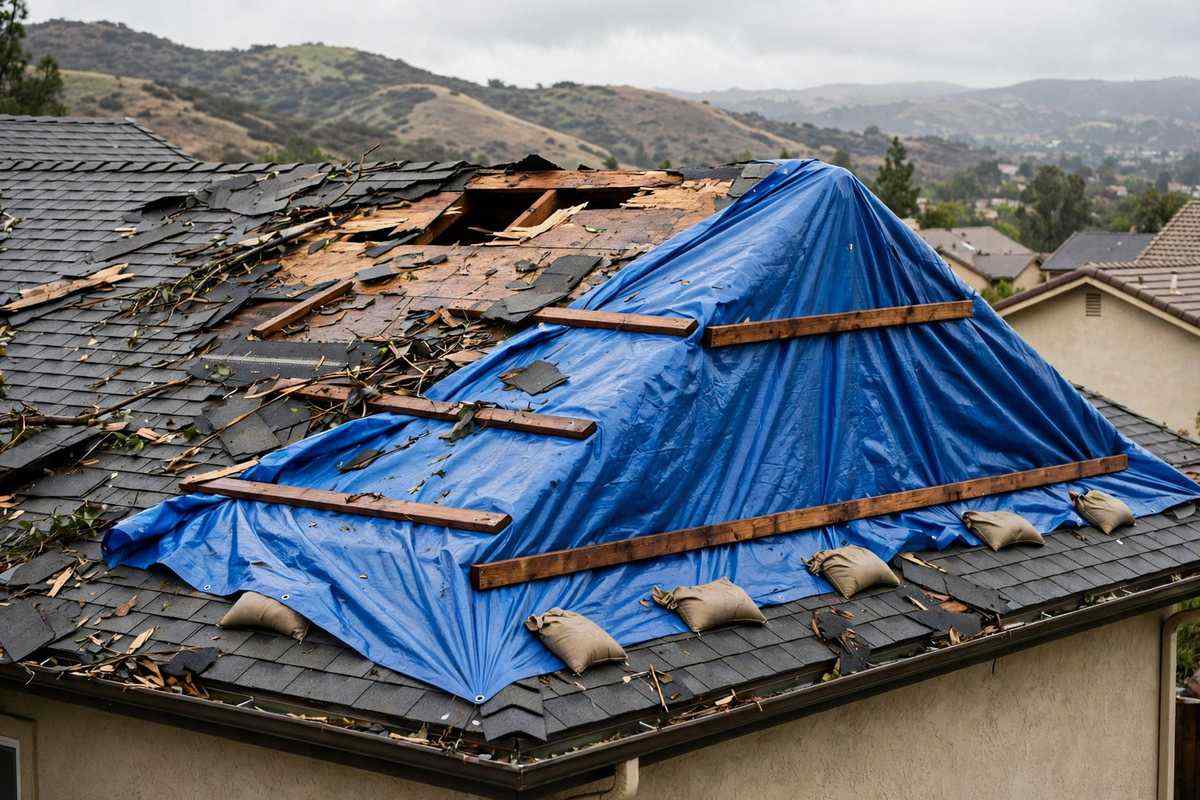
Roof demand in Simi Valley is driven by inland heat and ultraviolet exposure, concentrated winter rain, and Santa Ana wind, not by snow. Rain is strongly winter-concentrated and summers are essentially dry, so valleys, flashings and drains sit dry and collect debris for months and are then tested in a handful of winter storms. Santa Ana gusts in Simi Valley have been recorded at 62 mph, as on 4-5 October 2013.
A recent local fire was the Easy Fire, 30 October to 2 November 2019, at 1,806 acres, ignited near Easy Street and Madera Road at the westerly end of Simi Valley. The Woolsey Fire ignited on 8 November 2018 south of Simi Valley on or near the Santa Susana Field Laboratory and burned about 80 percent of that site.
Simi Valley is an incorporated city in Ventura County, incorporated on 10 October 1969, and permits inside city limits run through the City of Simi Valley Building & Safety Division, not through LADBS. The City's own FAQ states that re-roofing of more than 10 percent of the total square footage of the roof, or over 100 square feet, requires a permit. A job can therefore need a City permit without triggering other code thresholds, and the permit route, the fee line and the inspection outcome are confirmed at application, not assumed from another city's rules.
We trace the water to its source before we touch a shingle.
A roof leak in Simi Valley is usually found by tracing water, not by looking above the stain. Valleys, wall and chimney flashings, pipe boots, skylight curbs and tile underlayment are checked in that order, because water travels before it drips.
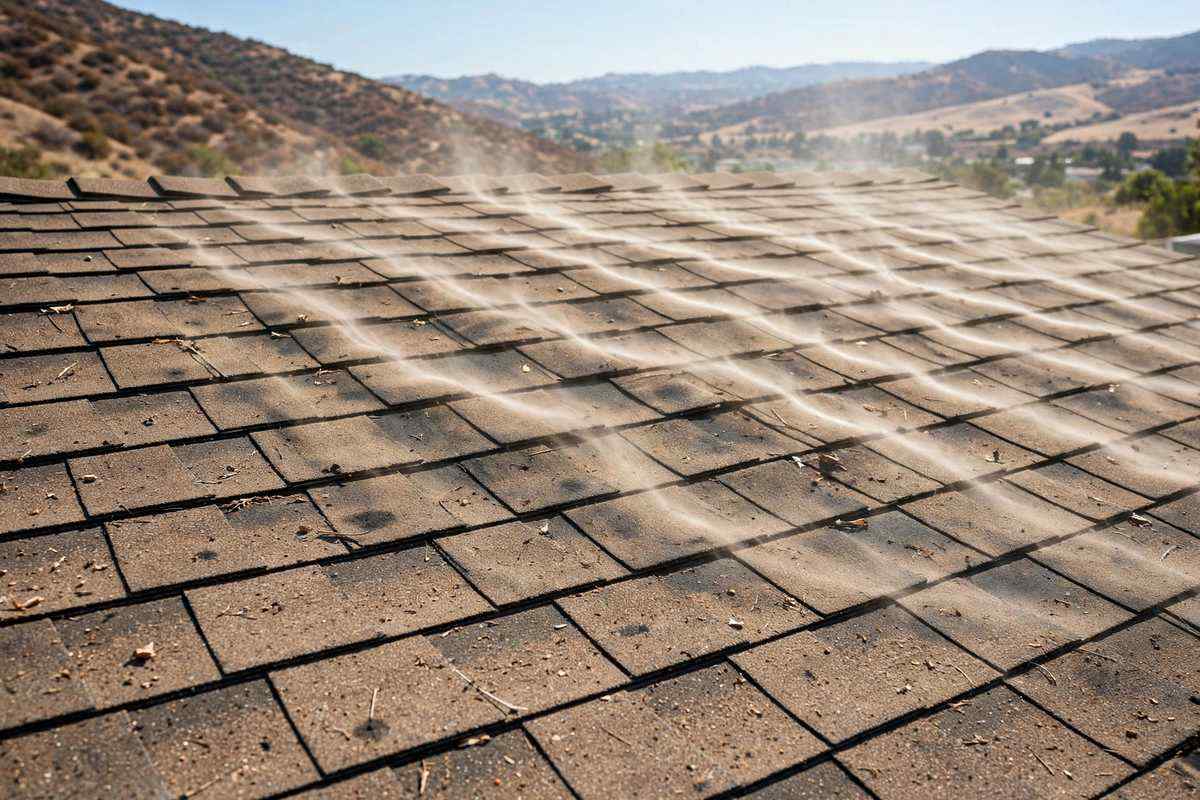
Santa Ana gusts in Simi Valley have been recorded at 62 mph, as on 4-5 October 2013.
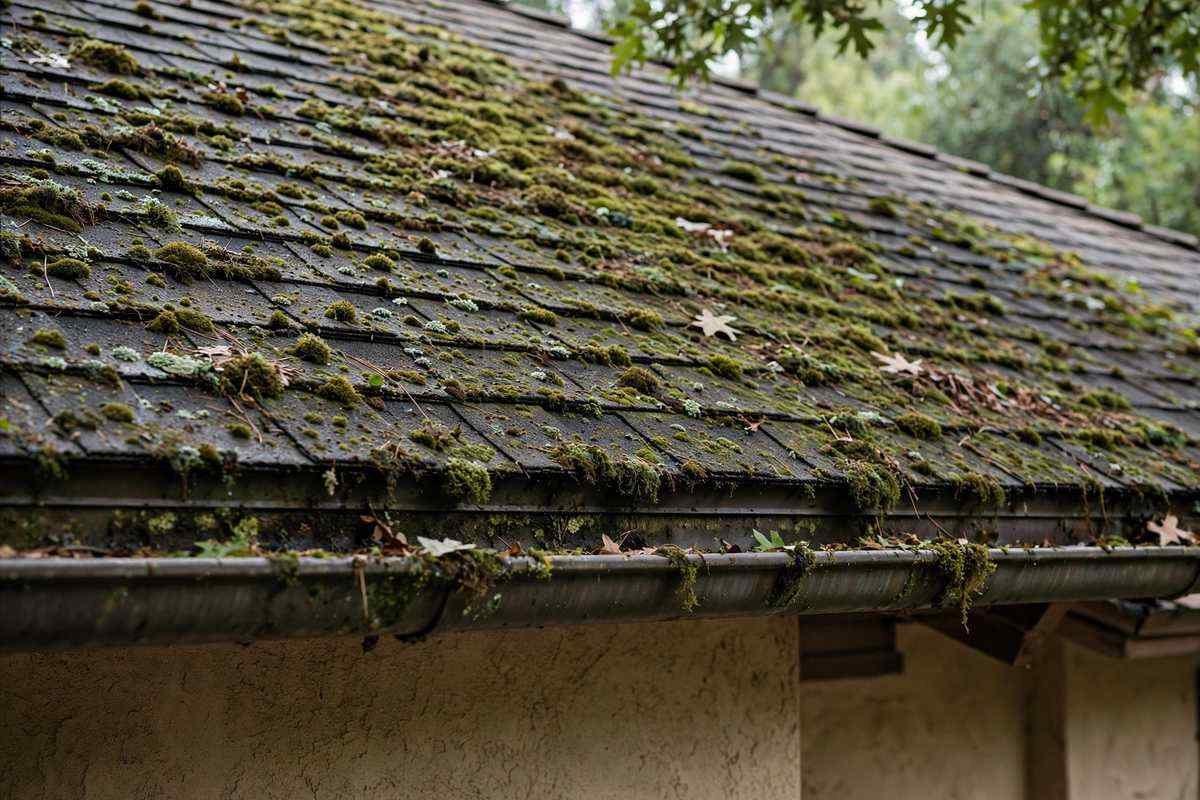
A recent local fire was the Easy Fire, 30 October to 2 November 2019, at 1,806 acres, ignited near Easy Street and Madera Road at the westerly end of Simi Valley.
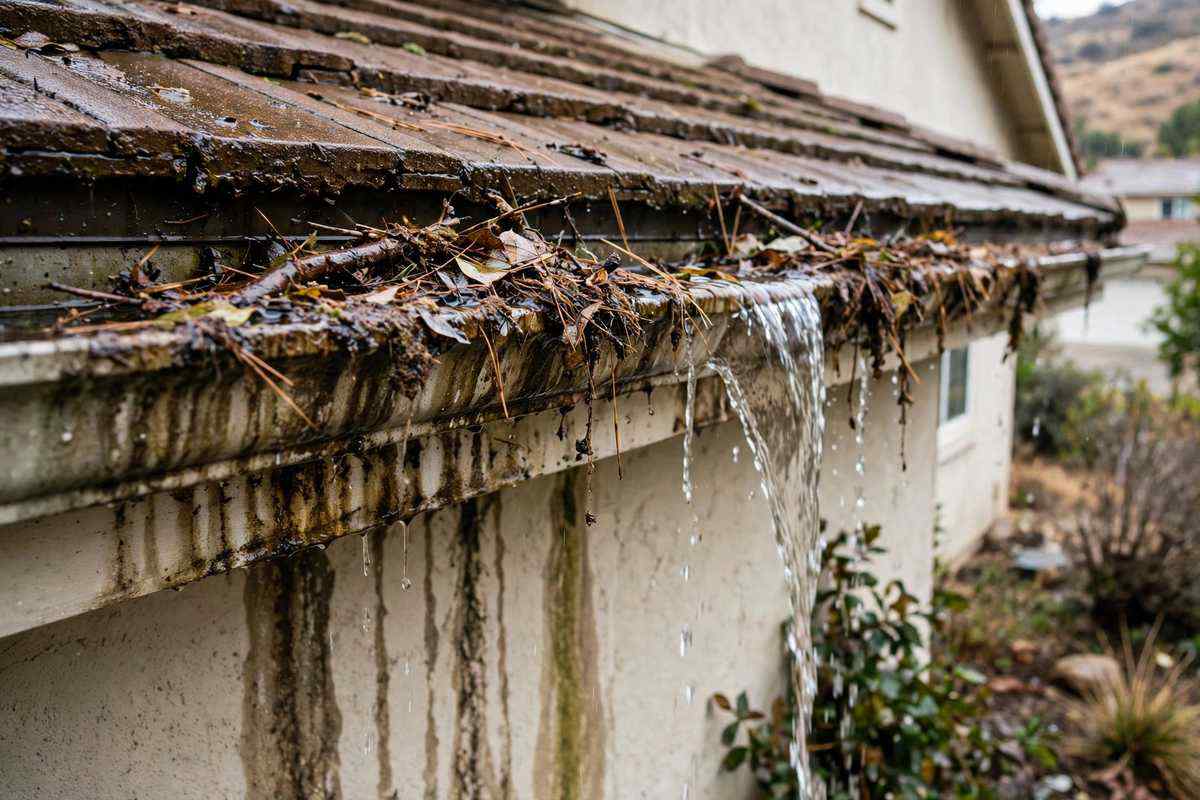
The Woolsey Fire ignited on 8 November 2018 south of Simi Valley on or near the Santa Susana Field Laboratory and burned about 80 percent of that site.
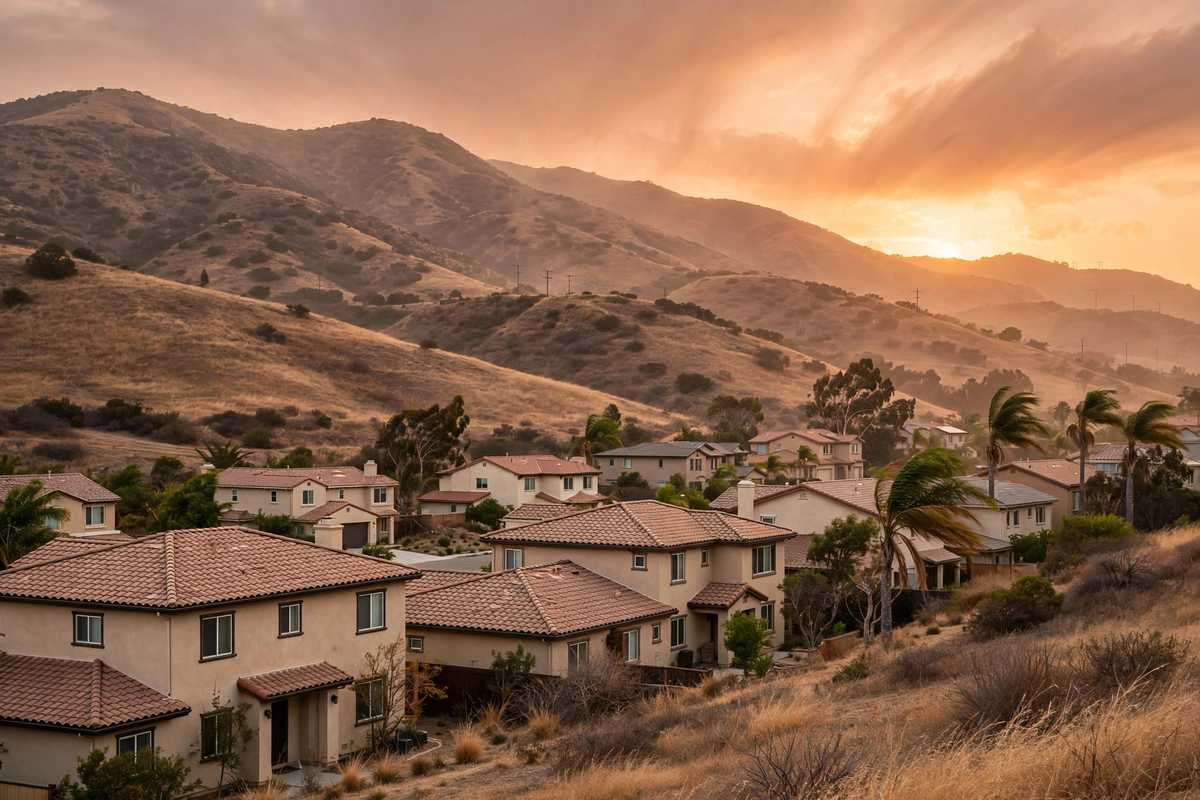
Simi Valley is an incorporated city in Ventura County, incorporated on 10 October 1969, and permits inside city limits run through the City of Simi Valley Building & Safety Division, not through LADBS.
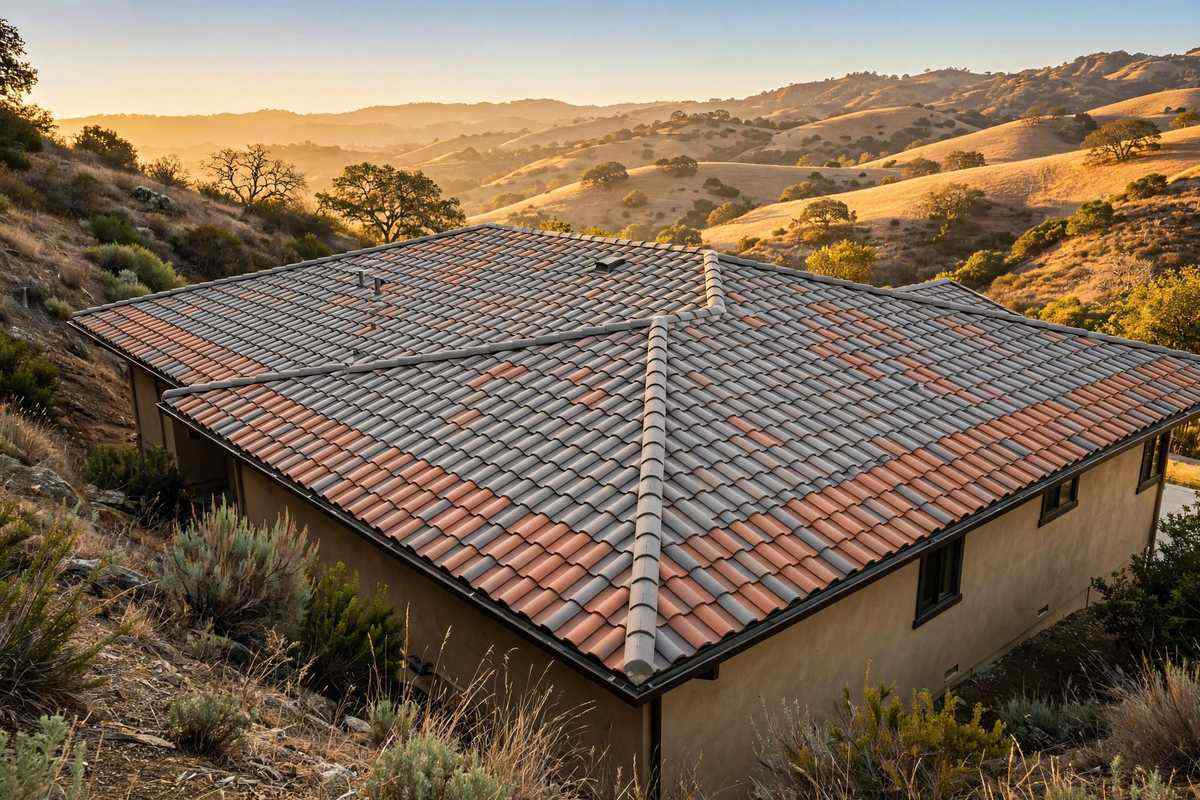
The City's own FAQ states that re-roofing of more than 10 percent of the total square footage of the roof, or over 100 square feet, requires a permit.

A job can therefore need a City permit without triggering other code thresholds, and the permit route, the fee line and the inspection outcome are confirmed at application, not assumed from another city's rules.
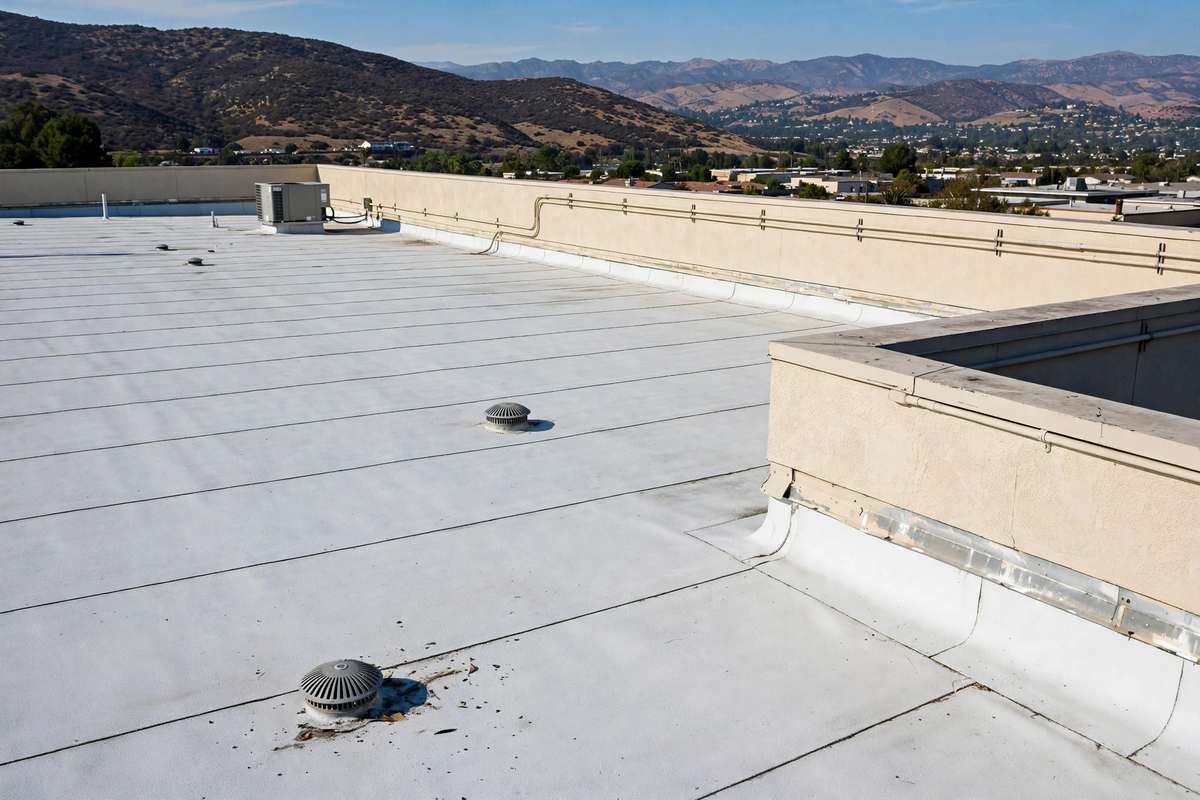
A roof leak in Simi Valley is usually found by tracing water, not by looking above the stain.

Valleys, wall and chimney flashings, pipe boots, skylight curbs and tile underlayment are checked in that order, because water travels before it drips.
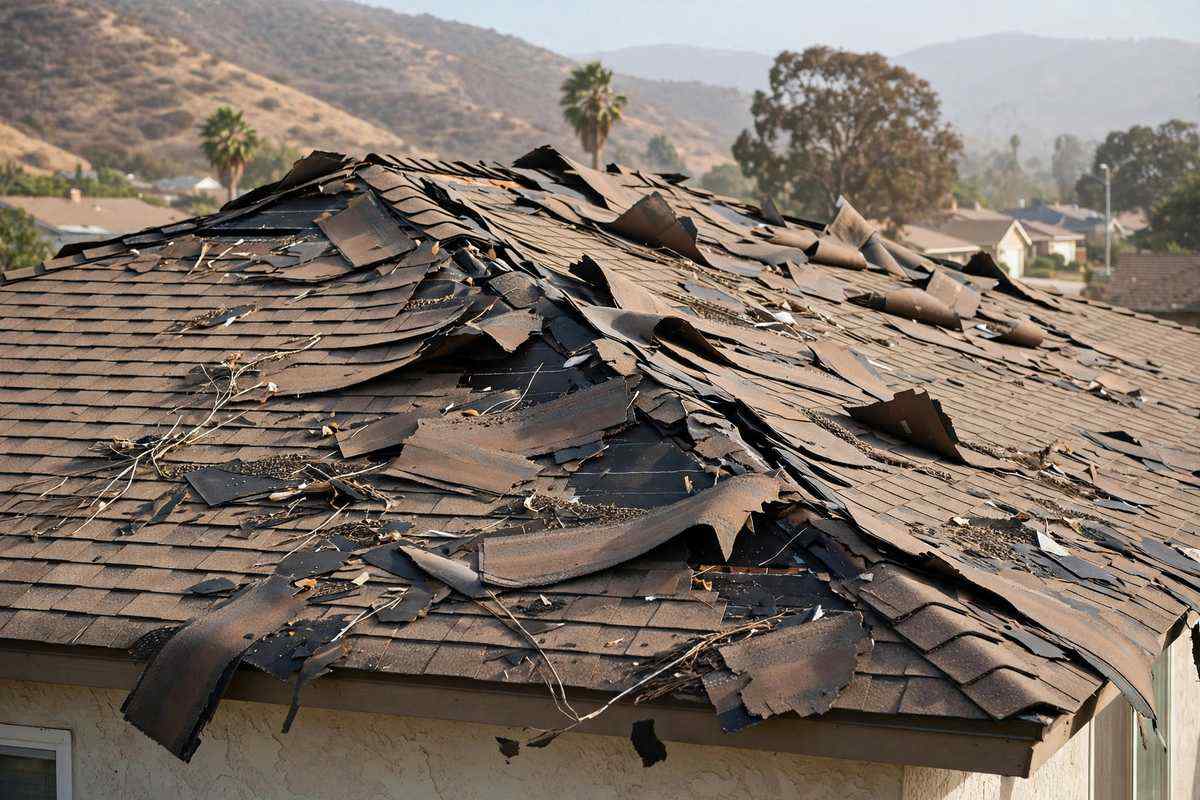
The most common Simi Valley leak pattern is not a broken tile alone: it is underlayment that has aged out under otherwise sound tile, flashing that has opened after a dry summer, or a dried and split pipe boot.
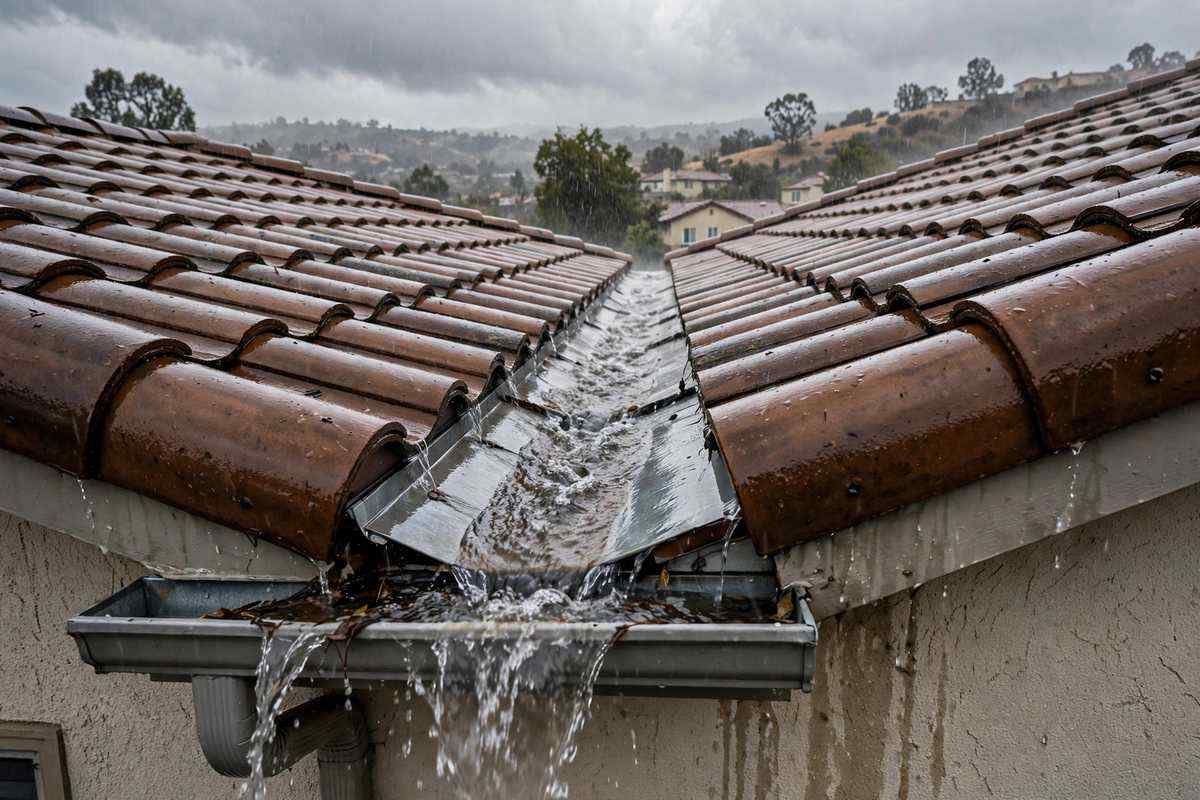
Leak repair is scoped by source, not by stain size.

A single valley or flashing repair, a pipe-boot replacement, or a tile lift-and-relay on one slope are different jobs with different permits, and the City permit limbs are checked against the actual area being re-roofed.
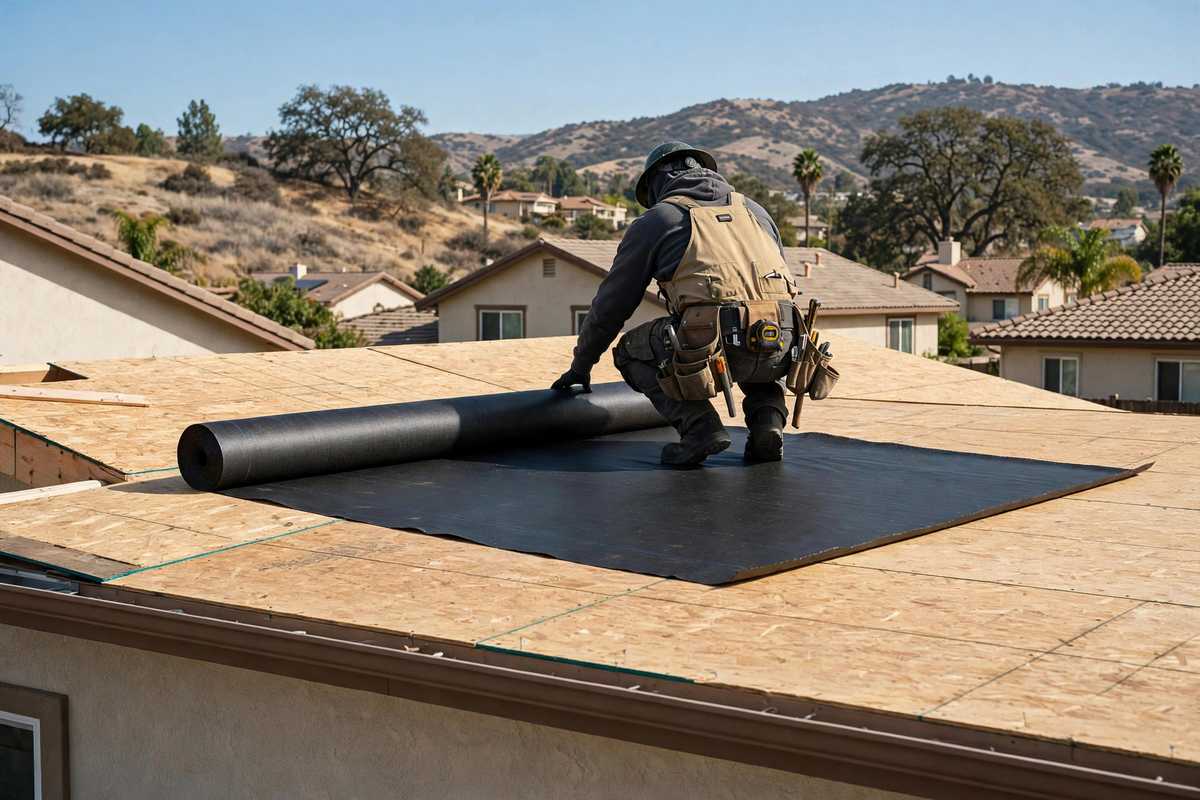
Roof demand in Simi Valley is driven by inland heat and ultraviolet exposure, concentrated winter rain, and Santa Ana wind, not by snow.
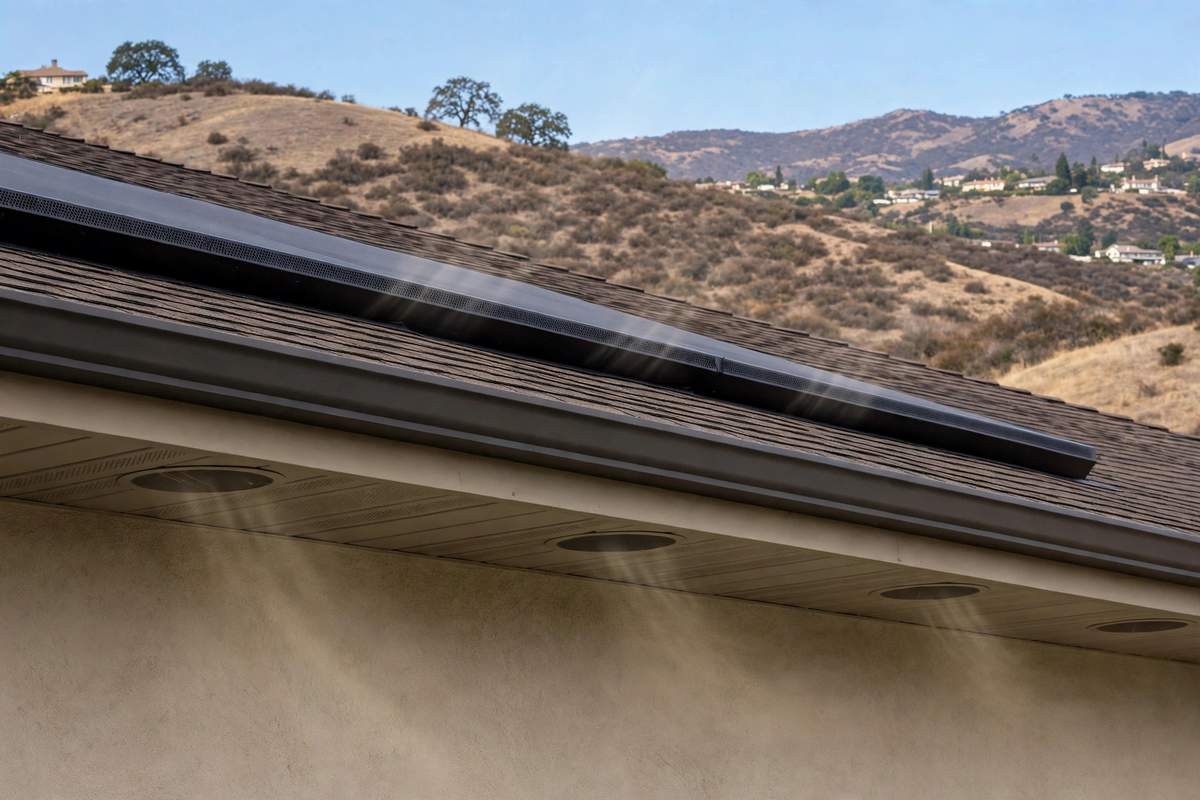
Rain is strongly winter-concentrated and summers are essentially dry, so valleys, flashings and drains sit dry and collect debris for months and are then tested in a handful of winter storms.
Santa Ana gusts in Simi Valley have been recorded at 62 mph, as on 4-5 October 2013.
A recent local fire was the Easy Fire, 30 October to 2 November 2019, at 1,806 acres, ignited near Easy Street and Madera Road at the westerly end of Simi Valley.
The Woolsey Fire ignited on 8 November 2018 south of Simi Valley on or near the Santa Susana Field Laboratory and burned about 80 percent of that site.
Simi Valley is an incorporated city in Ventura County, incorporated on 10 October 1969, and permits inside city limits run through the City of Simi Valley Building & Safety Division, not through LADBS.
A roof leak in Simi Valley is usually found by tracing water, not by looking above the stain. Valleys, wall and chimney flashings, pipe boots, skylight curbs and tile underlayment are checked in that order, because water travels before it drips.
A job can therefore need a City permit without triggering other code thresholds, and the permit route, the fee line and the inspection outcome are confirmed at application, not assumed from another city's rules.
A roof leak in Simi Valley is usually found by tracing water, not by looking above the stain.
Valleys, wall and chimney flashings, pipe boots, skylight curbs and tile underlayment are checked in that order, because water travels before it drips.
The most common Simi Valley leak pattern is not a broken tile alone: it is underlayment that has aged out under otherwise sound tile, flashing that has opened after a dry summer, or a dried and split pipe boot.
Leak repair is scoped by source, not by stain size.
A single valley or flashing repair, a pipe-boot replacement, or a tile lift-and-relay on one slope are different jobs with different permits, and the City permit limbs are checked against the actual area being re-roofed.
Roof demand in Simi Valley is driven by inland heat and ultraviolet exposure, concentrated winter rain, and Santa Ana wind, not by snow.
Rain is strongly winter-concentrated and summers are essentially dry, so valleys, flashings and drains sit dry and collect debris for months and are then tested in a handful of winter storms.
Santa Ana gusts in Simi Valley have been recorded at 62 mph, as on 4-5 October 2013.
A recent local fire was the Easy Fire, 30 October to 2 November 2019, at 1,806 acres, ignited near Easy Street and Madera Road at the westerly end of Simi Valley. The Woolsey Fire ignited on 8 November 2018 south of Simi Valley on or near the Santa Susana Field Laboratory and burned about 80 percent of that site.
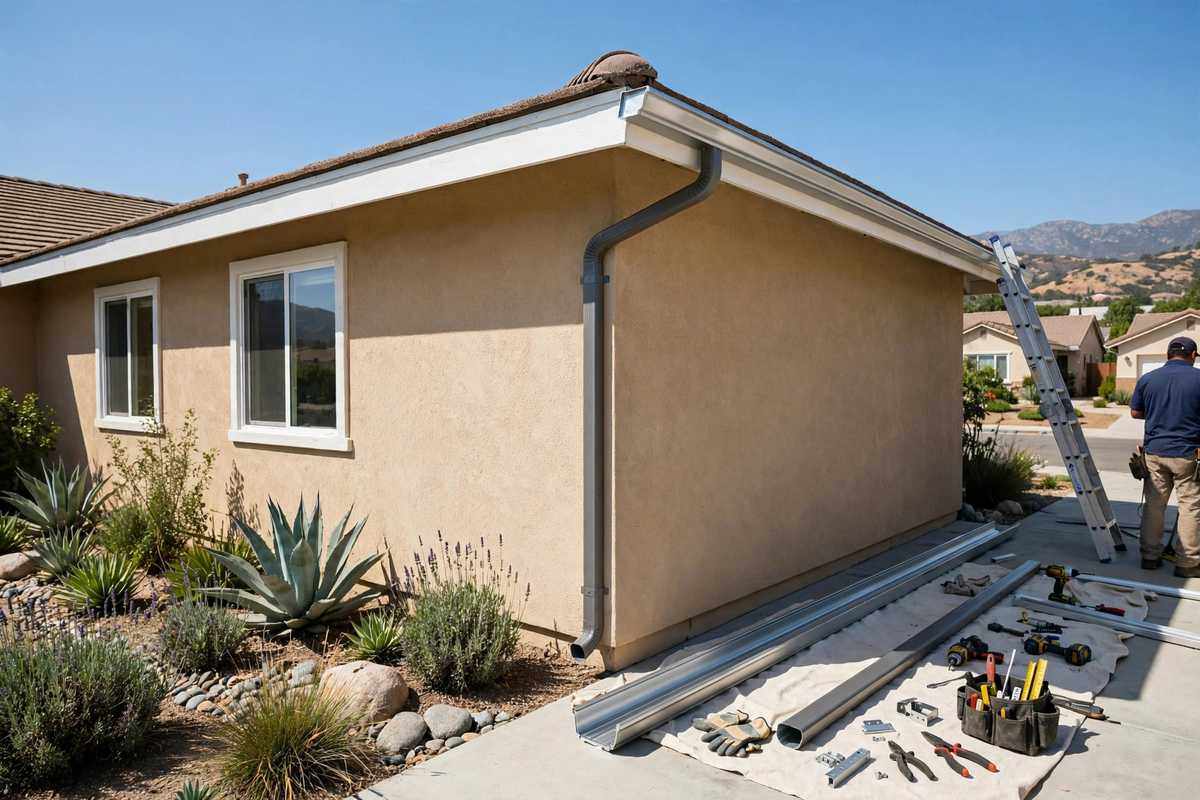
The Woolsey Fire ignited on 8 November 2018 south of Simi Valley on or near the Santa Susana Field Laboratory and burned about 80 percent of that site.
Simi Valley is an incorporated city in Ventura County, incorporated on 10 October 1969, and permits inside city limits run through the City of Simi Valley Building & Safety Division, not through LADBS.
The City's own FAQ states that re-roofing of more than 10 percent of the total square footage of the roof, or over 100 square feet, requires a permit.

A job can therefore need a City permit without triggering other code thresholds, and the permit route, the fee line and the inspection outcome are confirmed at application, not assumed from another city's rules.
A roof leak in Simi Valley is usually found by tracing water, not by looking above the stain.
Valleys, wall and chimney flashings, pipe boots, skylight curbs and tile underlayment are checked in that order, because water travels before it drips.
The most common Simi Valley leak pattern is not a broken tile alone: it is underlayment that has aged out under otherwise sound tile, flashing that has opened after a dry summer, or a dried and split pipe boot.
Leak repair is scoped by source, not by stain size.
The most common Simi Valley leak pattern is not a broken tile alone: it is underlayment that has aged out under otherwise sound tile, flashing that has opened after a dry summer, or a dried and split pipe boot.
Leak repair is scoped by source, not by stain size. A single valley or flashing repair, a pipe-boot replacement, or a tile lift-and-relay on one slope are different jobs with different permits, and the City permit limbs are checked against the actual area being re-roofed.
These are published Oct-2026 regional market ranges, not Treggo Lume prices. A written estimate follows inspection.
Roof demand in Simi Valley is driven by inland heat and ultraviolet exposure, concentrated winter rain, and Santa Ana wind, not by snow. Rain is strongly winter-concentrated and summers are essentially dry, so valleys, flashings and drains sit dry and collect debris for months and are then tested in a handful of winter storms. Santa Ana gusts in Simi Valley have been recorded at 62 mph, as on 4-5 October 2013.
Santa Ana gusts in Simi Valley have been recorded at 62 mph, as on 4-5 October 2013.
A recent local fire was the Easy Fire, 30 October to 2 November 2019, at 1,806 acres, ignited near Easy Street and Madera Road at the westerly end of Simi Valley.
The Woolsey Fire ignited on 8 November 2018 south of Simi Valley on or near the Santa Susana Field Laboratory and burned about 80 percent of that site.
The most common Simi Valley leak pattern is not a broken tile alone: it is underlayment that has aged out under otherwise sound tile, flashing that has opened after a dry summer, or a dried and split pipe boot.
The City's own FAQ states that re-roofing of more than 10 percent of the total square footage of the roof, or over 100 square feet, requires a permit.
A job can therefore need a City permit without triggering other code thresholds, and the permit route, the fee line and the inspection outcome are confirmed at application, not assumed from another city's rules.
A roof leak in Simi Valley is usually found by tracing water, not by looking above the stain.
Valleys, wall and chimney flashings, pipe boots, skylight curbs and tile underlayment are checked in that order, because water travels before it drips.
Customer reviews are not published on this website yet. If you would like to discuss a roof in Simi Valley, call Treggo Lume Home Roofers at (805) 669-9300 or visit 1712 Erringer Rd, Simi Valley, CA 93065. A written scope follows inspection of the actual roof.
A roof leak in Simi Valley is usually found by tracing water, not by looking above the stain. Valleys, wall and chimney flashings, pipe boots, skylight curbs and tile underlayment are checked in that order, because water travels before it drips.
A written scope follows inspection of the actual roof, because size, pitch, number of layers, material, access, and permit requirements all change the work. This website does not publish a firm price for this business; published market ranges elsewhere on this site are labelled as market data, not as a quote.
A leak rarely sits directly above the ceiling stain. Common Simi Valley sources are valley and wall flashings, pipe boots dried by heat, and aged underlayment under otherwise sound tile. The source is traced on inspection, and the scope states whether a local repair or a larger relay or replacement is needed.
No same-day timing is promised on this website. Whether a leak can be repaired on the first visit depends on what inspection finds, the material needed, weather, and scheduling, which is arranged by phone at (805) 669-9300. If water is coming in, call to discuss temporary protection and the next inspection step.
A leak rarely sits directly above the ceiling stain. Common Simi Valley sources are valley and wall flashings, pipe boots dried by heat, and aged underlayment under otherwise sound tile. The source is traced on inspection, and the scope states whether a local repair or a larger relay or replacement is needed.
The most common Simi Valley leak pattern is not a broken tile alone: it is underlayment that has aged out under otherwise sound tile, flashing that has opened after a dry summer, or a dried and split pipe boot.
Call Treggo Lume Home Roofers at (805) 669-9300 or visit 1712 Erringer Rd, Simi Valley, CA 93065, to discuss your roof.
Roof demand in Simi Valley is driven by inland heat and ultraviolet exposure, concentrated winter rain, and Santa Ana wind, not by snow. Rain is strongly winter-concentrated and summers are essentially dry, so valleys, flashings and drains sit dry and collect debris for months and are then tested in a handful of winter storms. Santa Ana gusts in Simi Valley have been recorded at 62 mph, as on 4-5 October 2013.
(805) 669-9300