
Written scope
The covering can be sound while the flashing has opened, cracked or been caulked over.
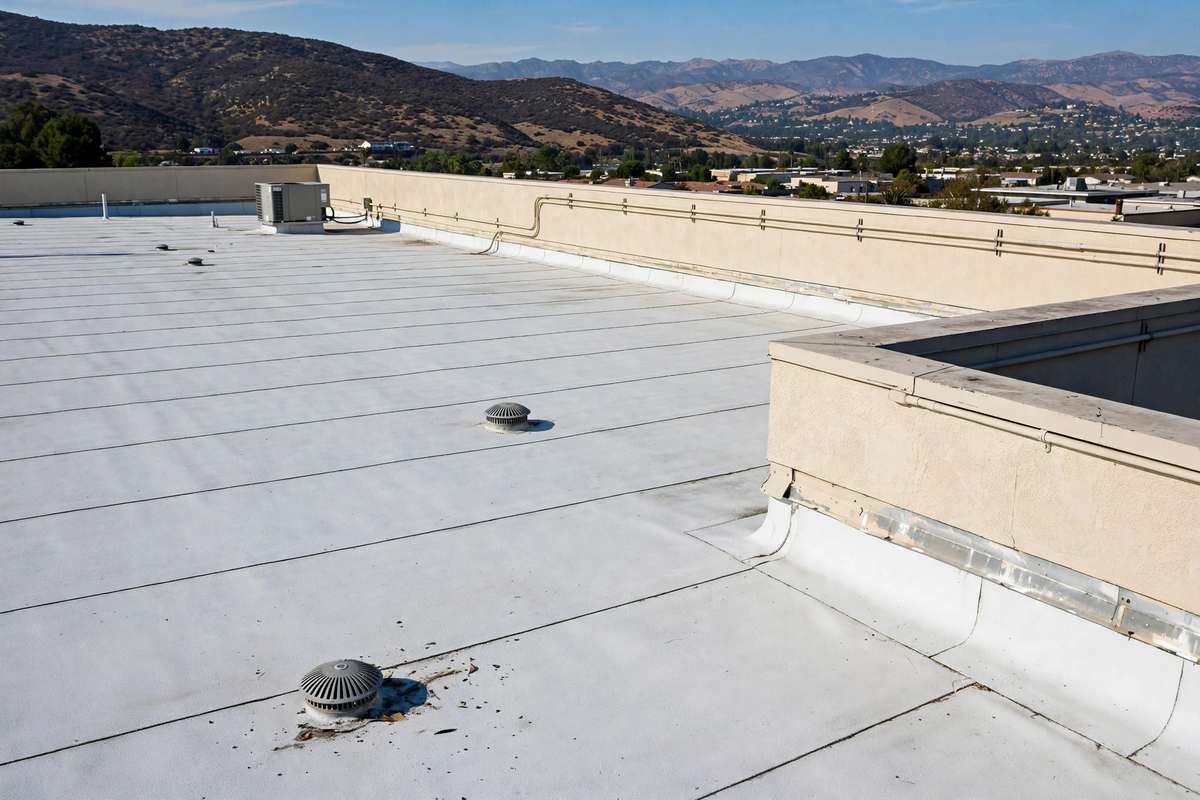
Flashing is where most Simi Valley roofs leak first: valleys, wall intersections, chimneys, skylight curbs, vents and pipe boots. The covering can be sound while the flashing has opened, cracked or been caulked over.
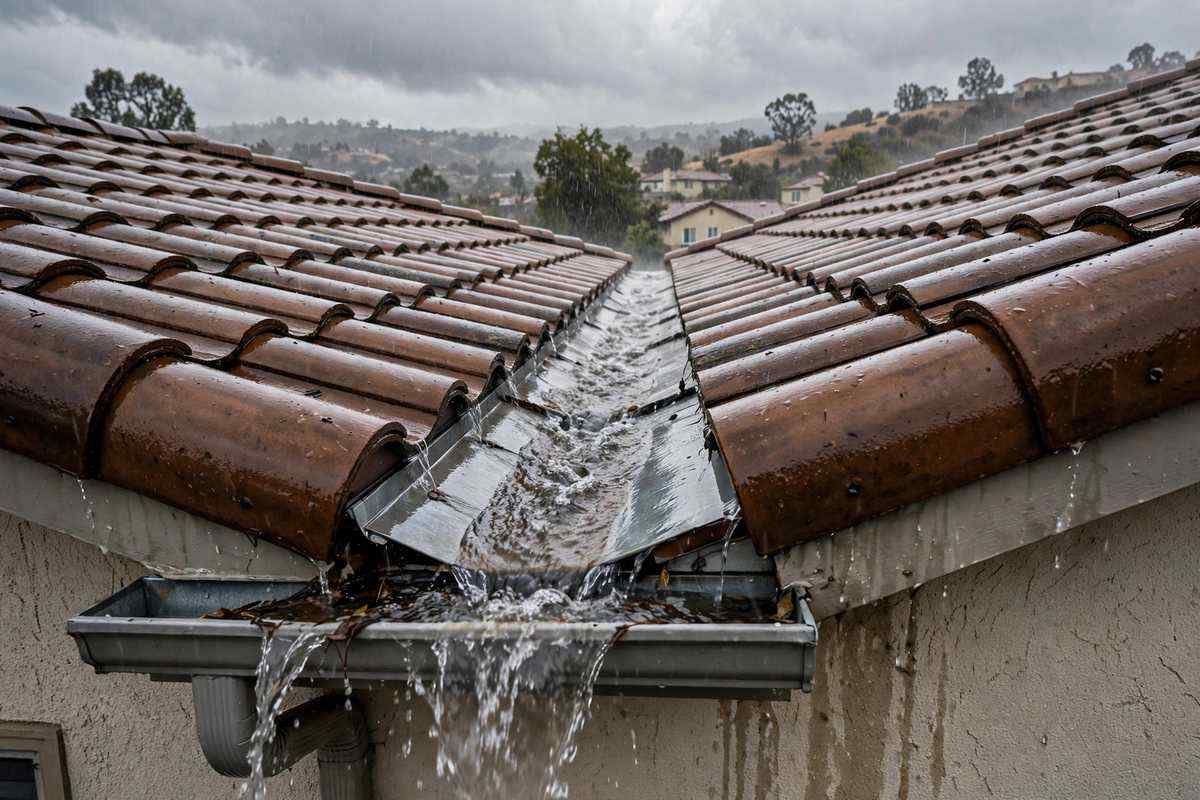
Flashing repair means replacing the metal and the seal, in the correct sequence with the covering, not smearing sealant over the joint. The sequence matters because water must be directed out and down at every step, not trapped behind a new layer.
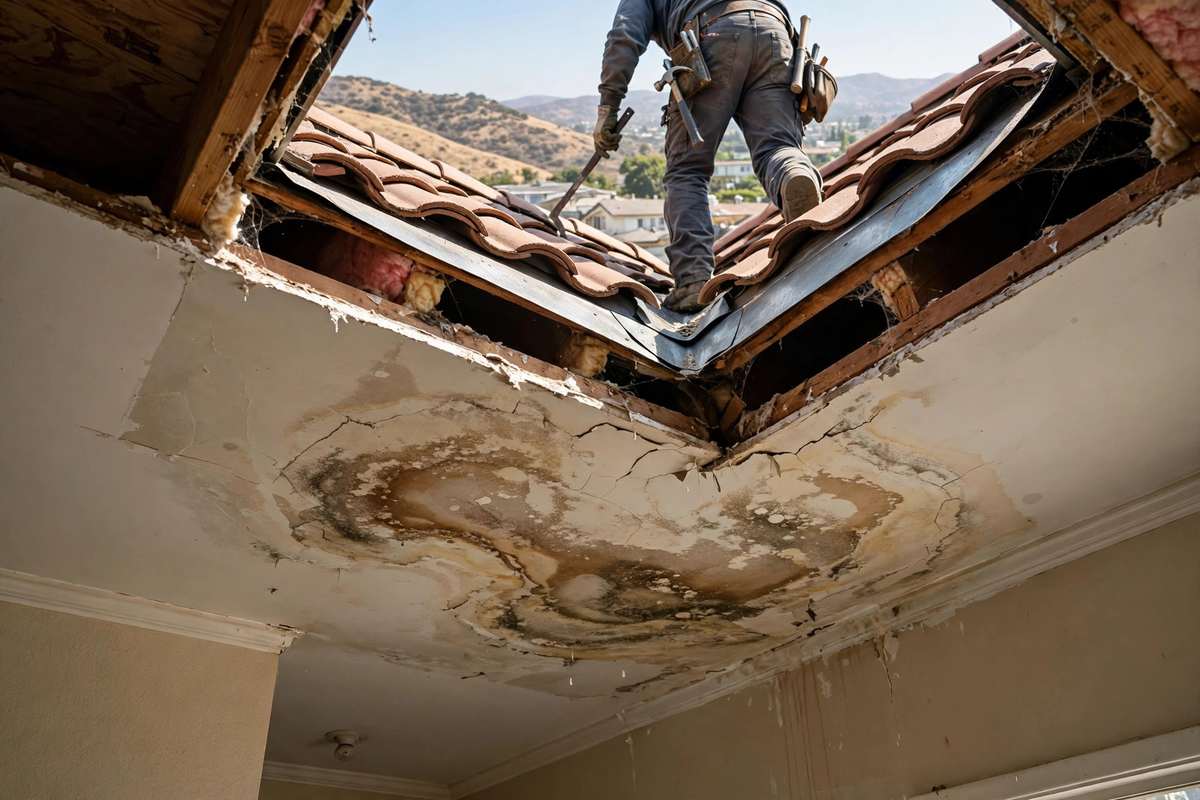
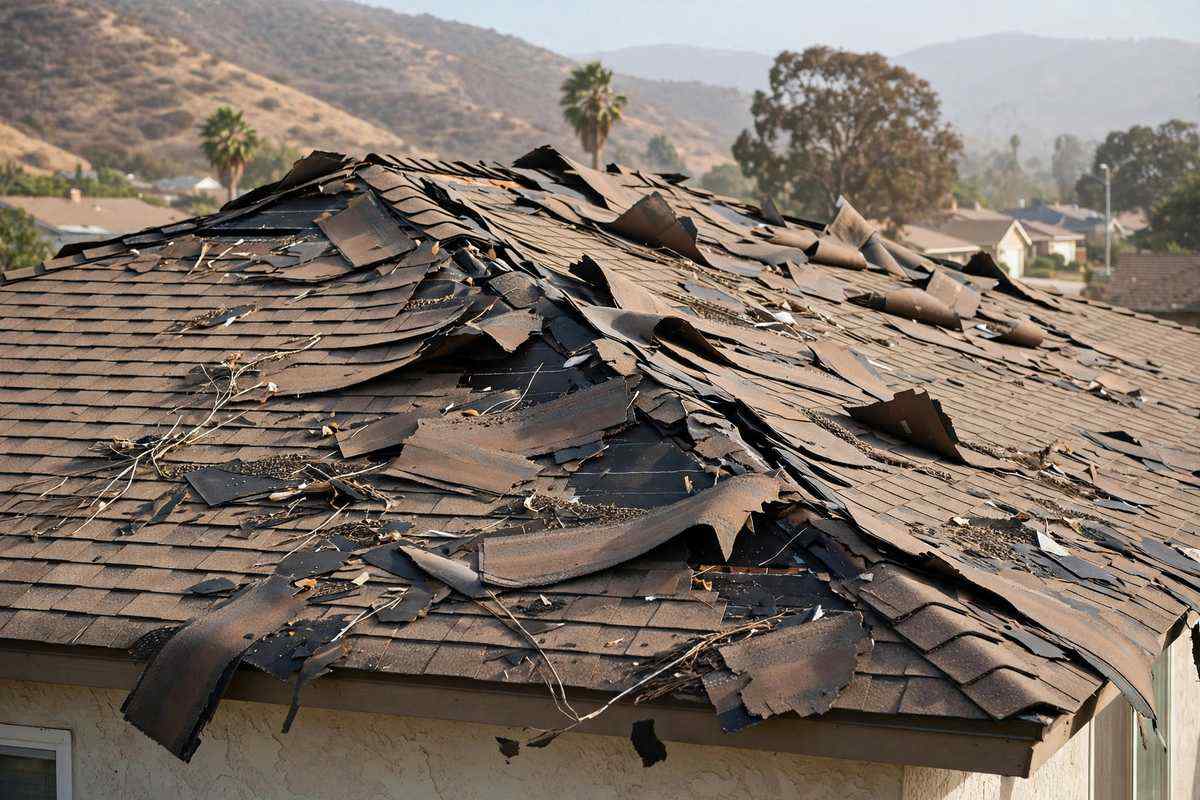
Flashing repair means replacing the metal and the seal, in the correct sequence with the covering, not smearing sealant over the joint.
Published regional market ranges include architectural asphalt at $550 to $900 per square and tile re-lay at $900 to $1,600 per square in a Torrance / South Bay 2026 guide, and California repair work most commonly at $450 to $3,200 in a Modernize guide updated 26 August 2026. One square is 100 square feet of roof surface, not floor area, and a written estimate follows inspection of the actual roof.
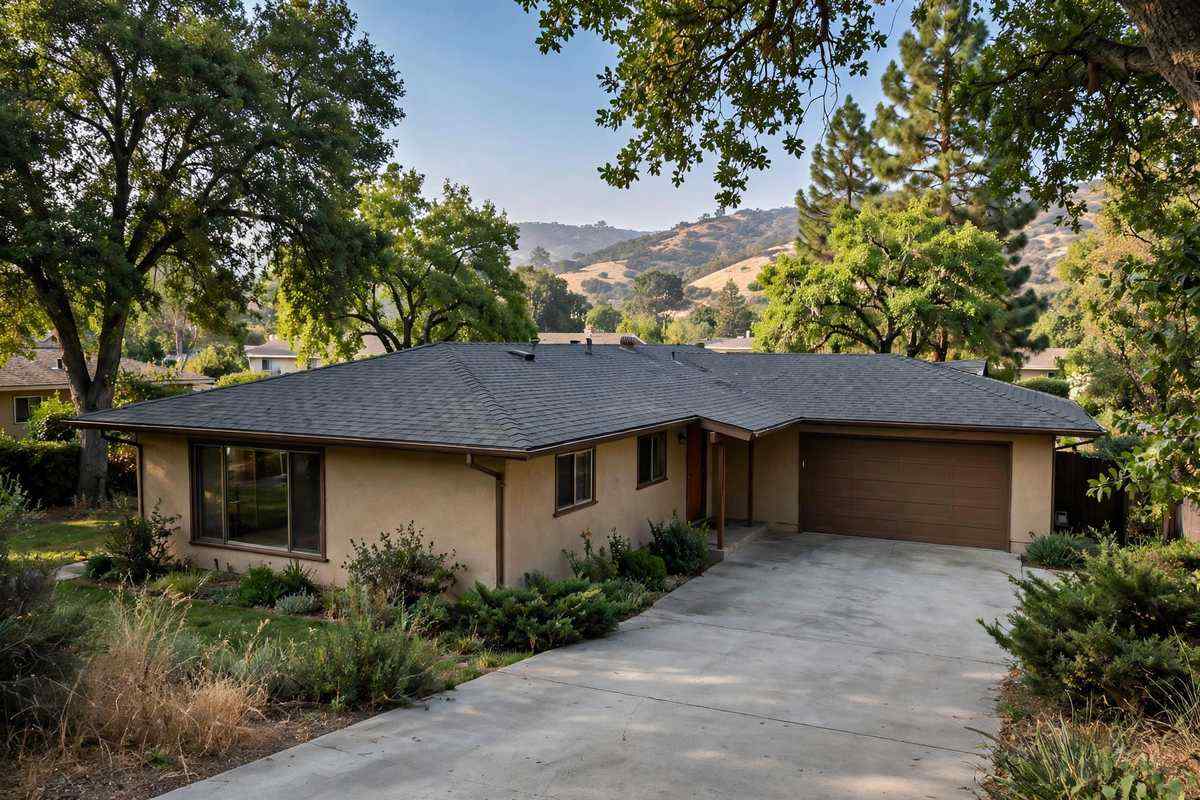
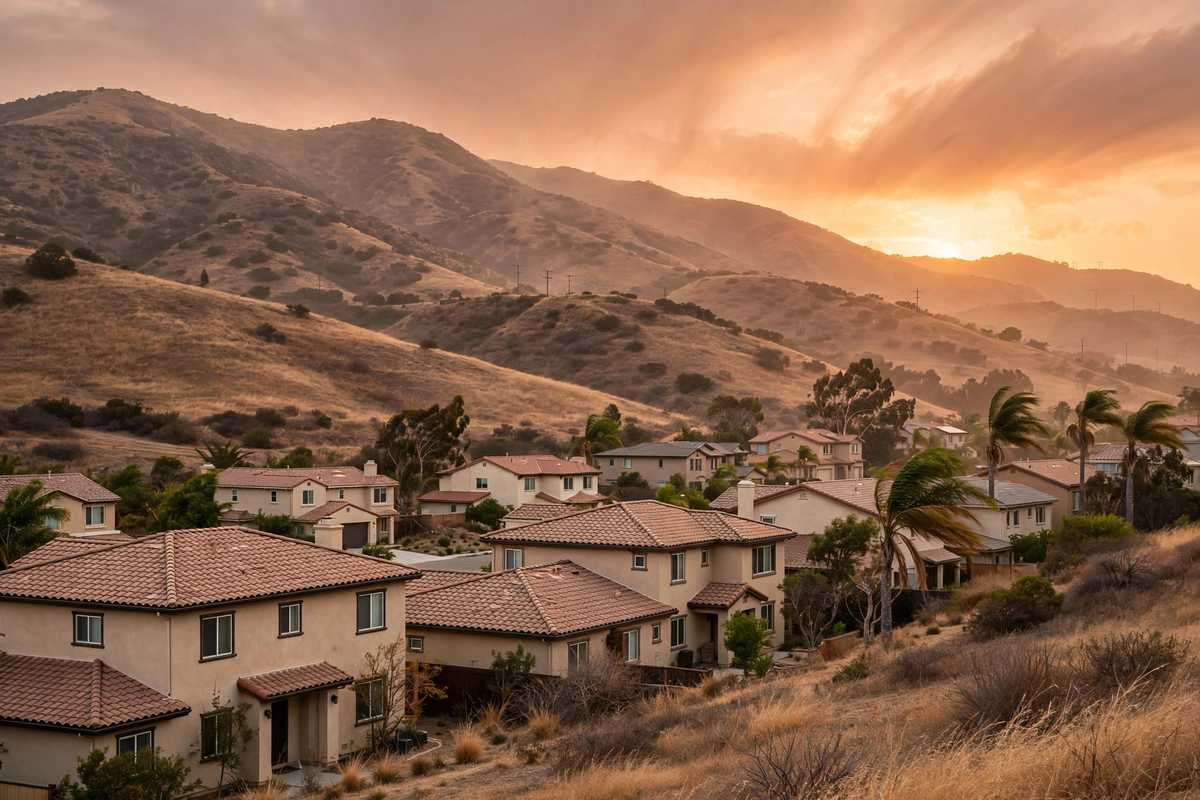
Simi Valley is an ageing tract re-roof market, not a new-construction market. Most Simi Valley homes were built in the 1960s and the 1980s, with a median construction year in the late 1970s. A large share of roofs therefore sit on homes 35 to 65 years old, at or beyond a first or second re-roof cycle on age grounds alone, so each roof still needs its own inspection.
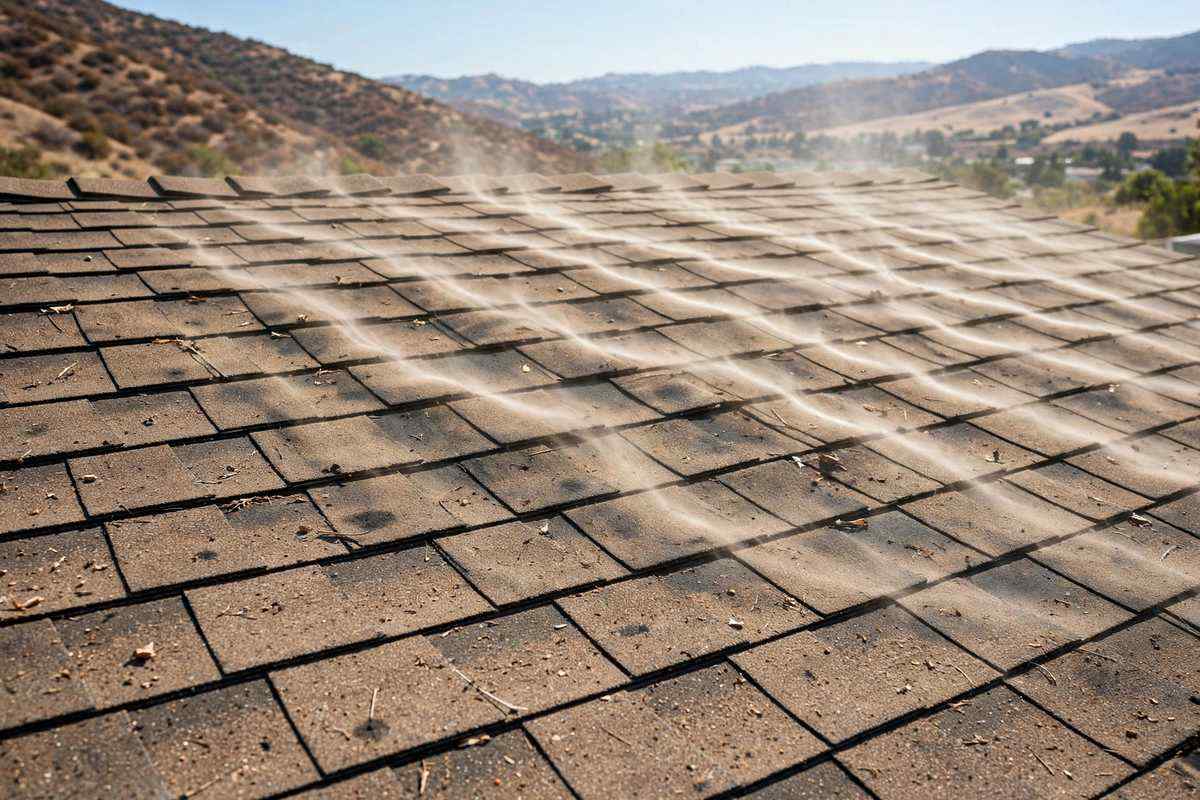
Roof demand in Simi Valley is driven by inland heat and ultraviolet exposure, concentrated winter rain, and Santa Ana wind, not by snow. Rain is strongly winter-concentrated and summers are essentially dry, so valleys, flashings and drains sit dry and collect debris for months and are then tested in a handful of winter storms. Santa Ana gusts in Simi Valley have been recorded at 62 mph, as on 4-5 October 2013.
We replace the metal that keeps water out, then test it before we leave.
Flashing is where most Simi Valley roofs leak first: valleys, wall intersections, chimneys, skylight curbs, vents and pipe boots. The covering can be sound while the flashing has opened, cracked or been caulked over.
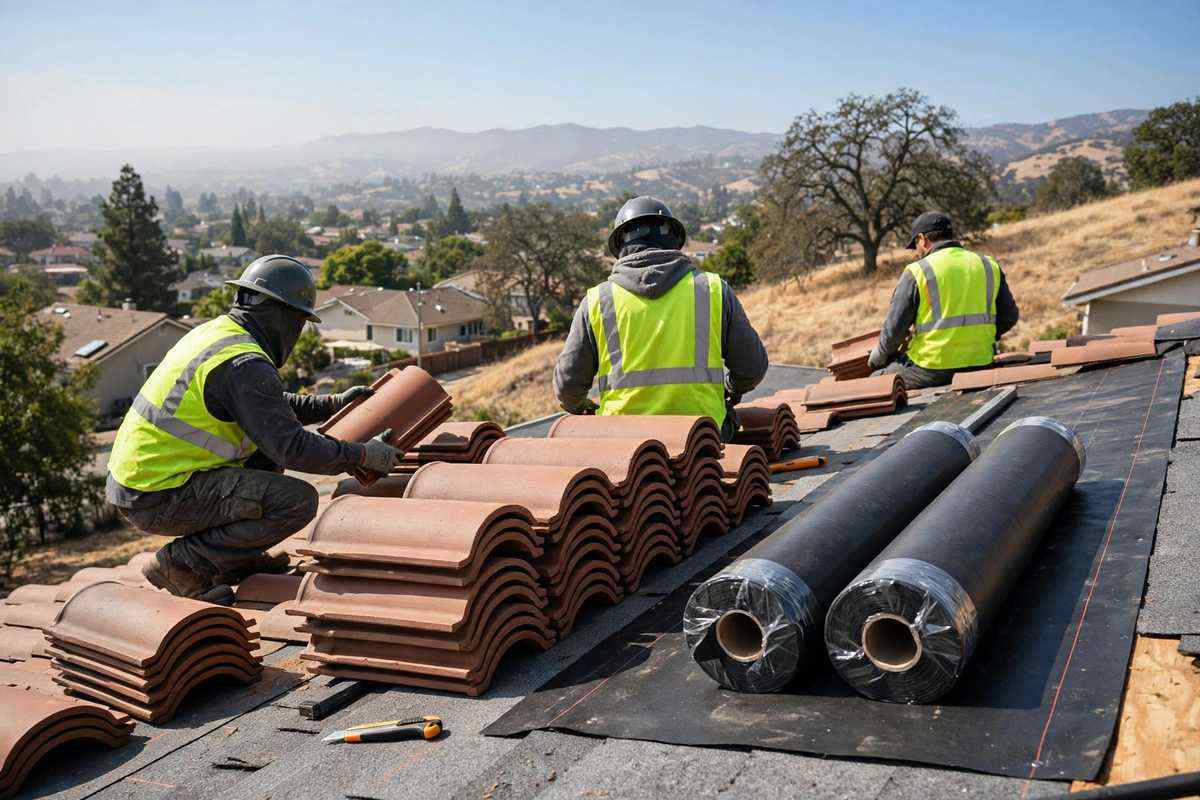
Published regional market ranges include architectural asphalt at $550 to $900 per square and tile re-lay at $900 to $1,600 per square in a Torrance / South Bay 2026 guide, and California repair work most commonly at $450 to $3,200 in a Modernize guide updated 26 August 2026.
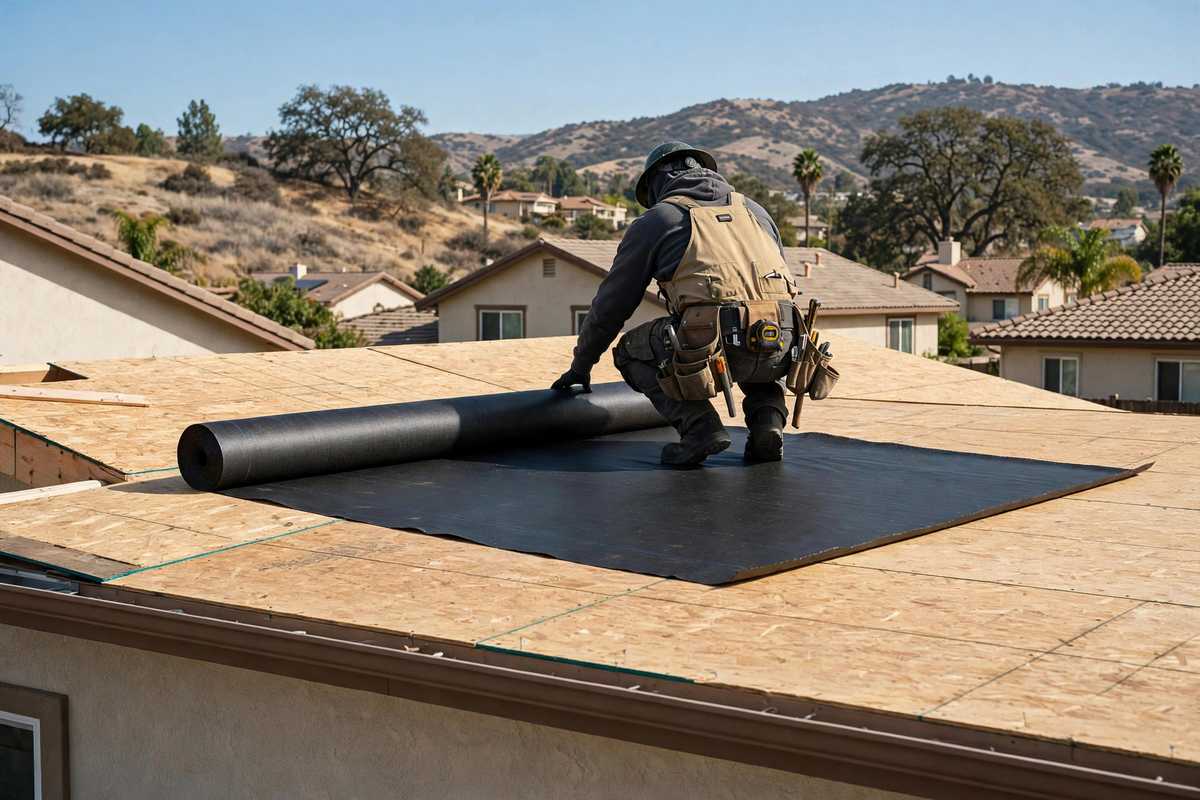
One square is 100 square feet of roof surface, not floor area, and a written estimate follows inspection of the actual roof.
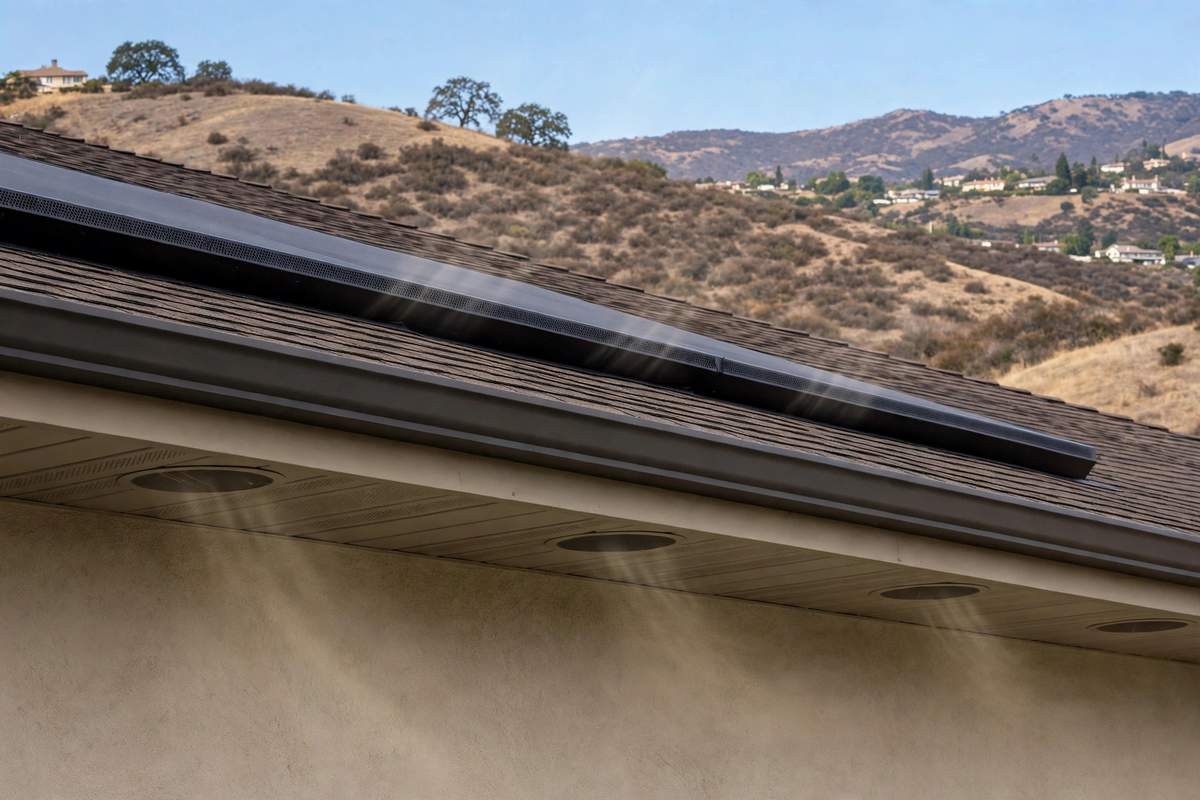
Simi Valley is an ageing tract re-roof market, not a new-construction market.
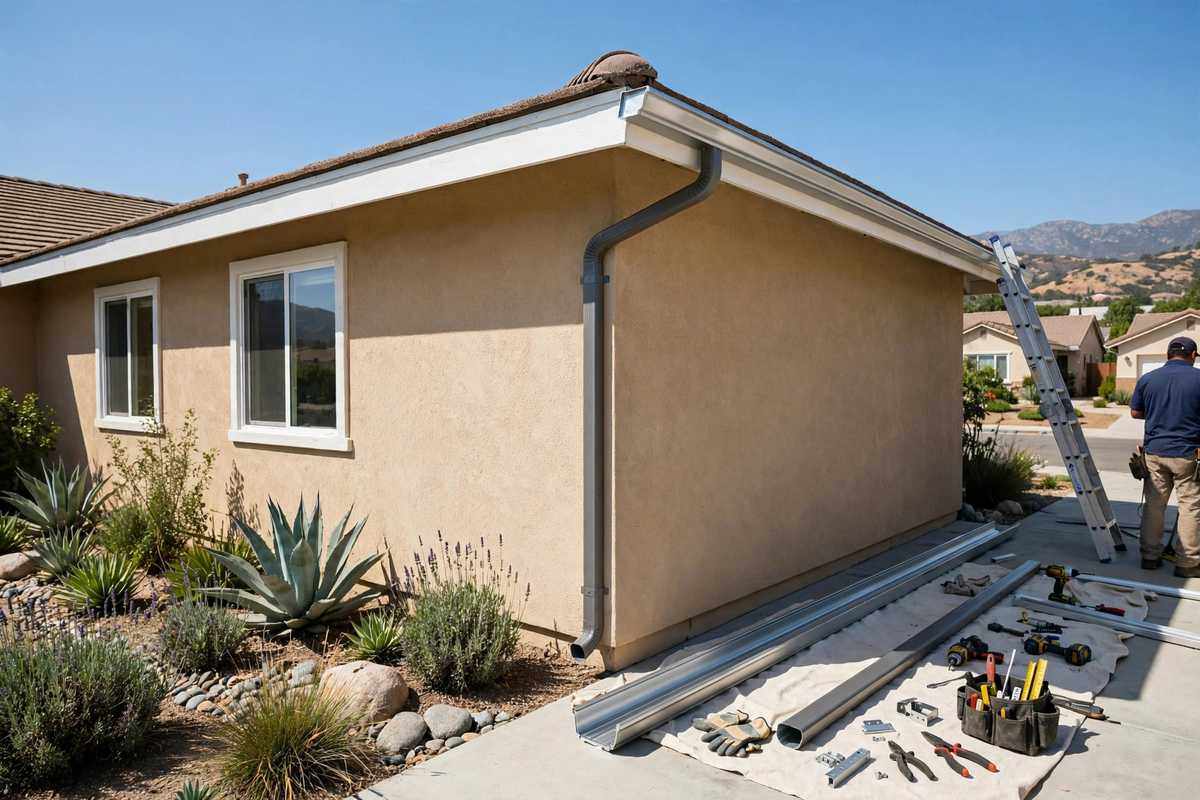
Most Simi Valley homes were built in the 1960s and the 1980s, with a median construction year in the late 1970s.
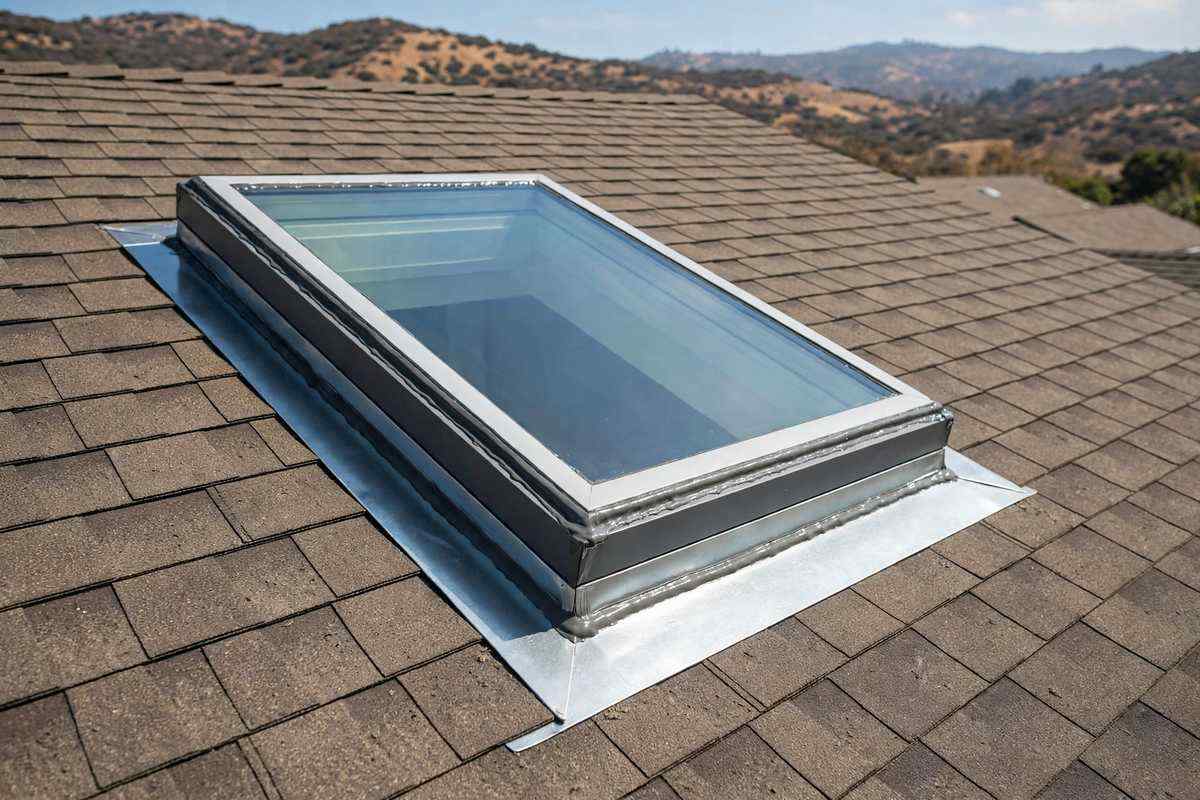
A large share of roofs therefore sit on homes 35 to 65 years old, at or beyond a first or second re-roof cycle on age grounds alone, so each roof still needs its own inspection.
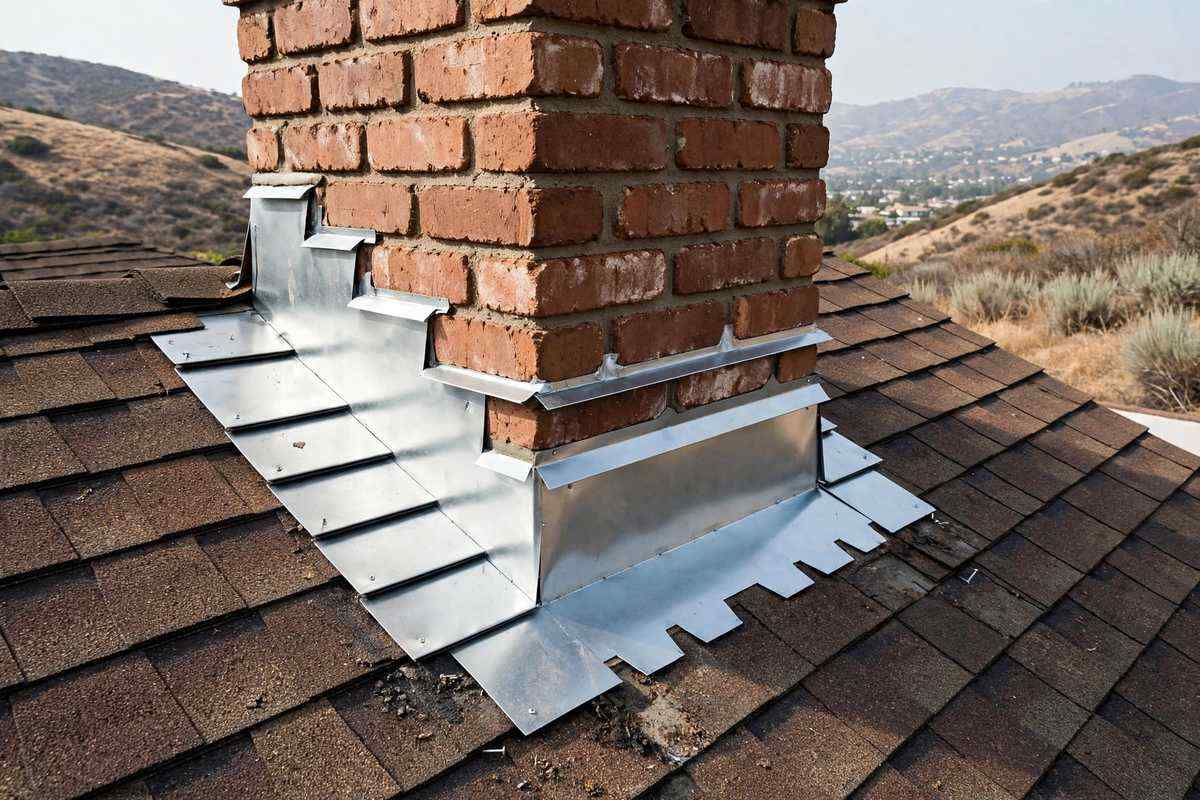
Roof demand in Simi Valley is driven by inland heat and ultraviolet exposure, concentrated winter rain, and Santa Ana wind, not by snow.
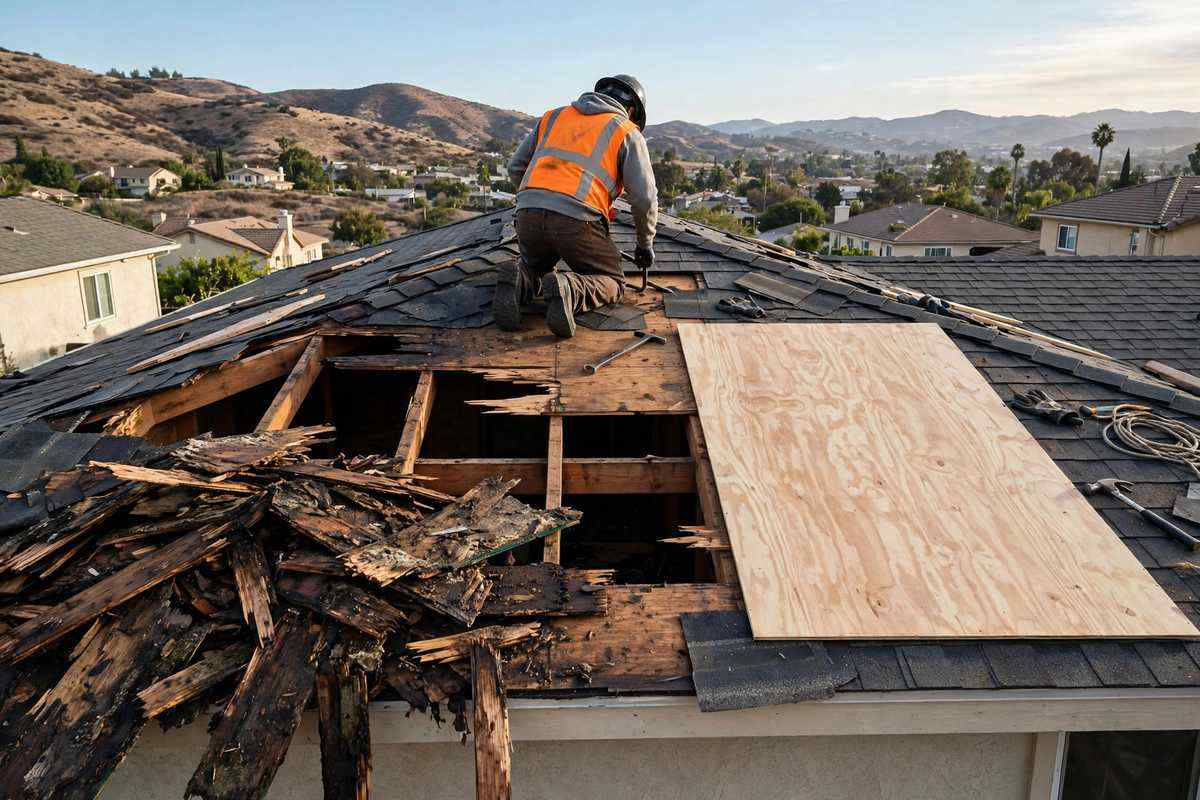
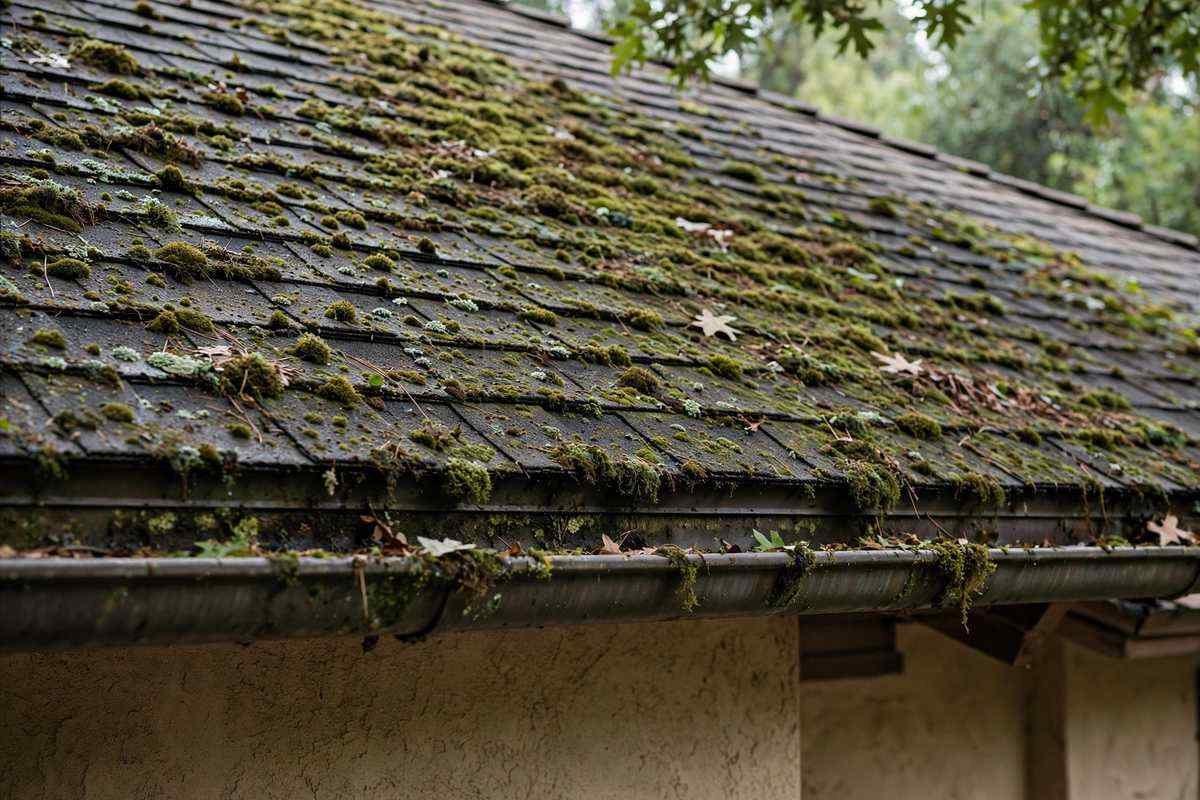
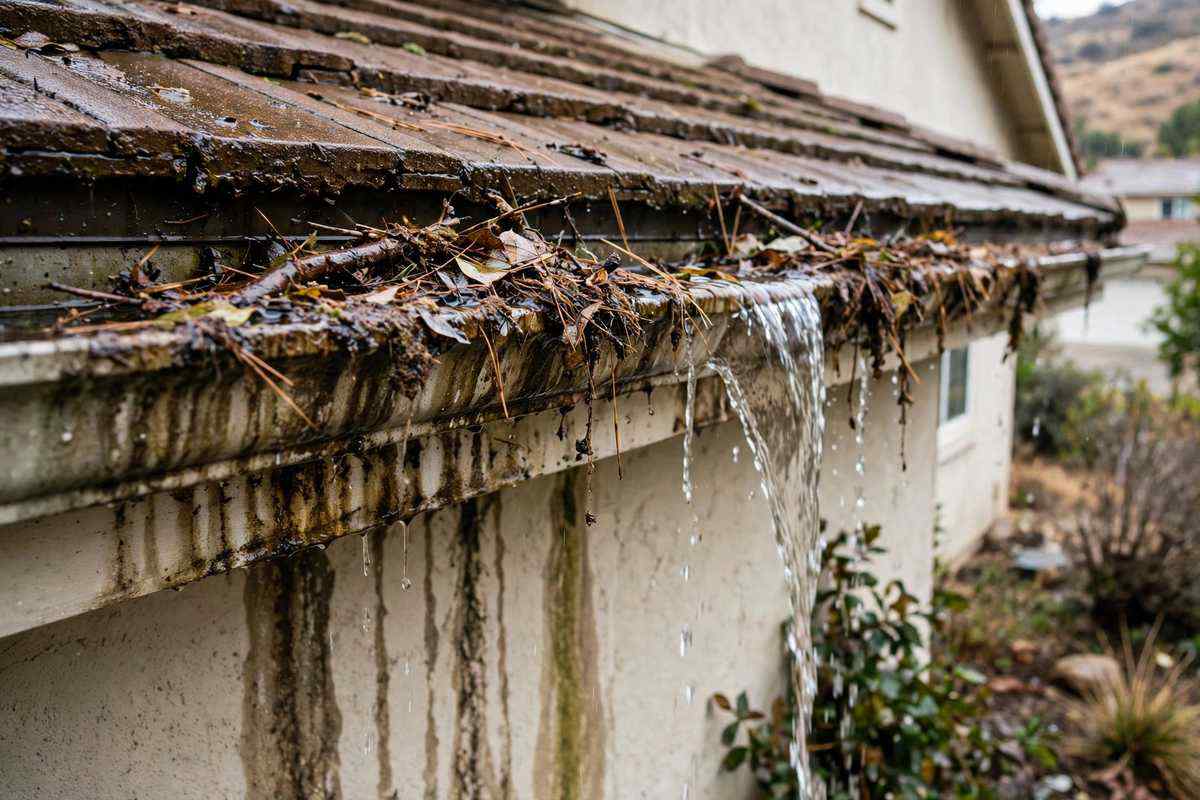
Rain is strongly winter-concentrated and summers are essentially dry, so valleys, flashings and drains sit dry and collect debris for months and are then tested in a handful of winter storms.
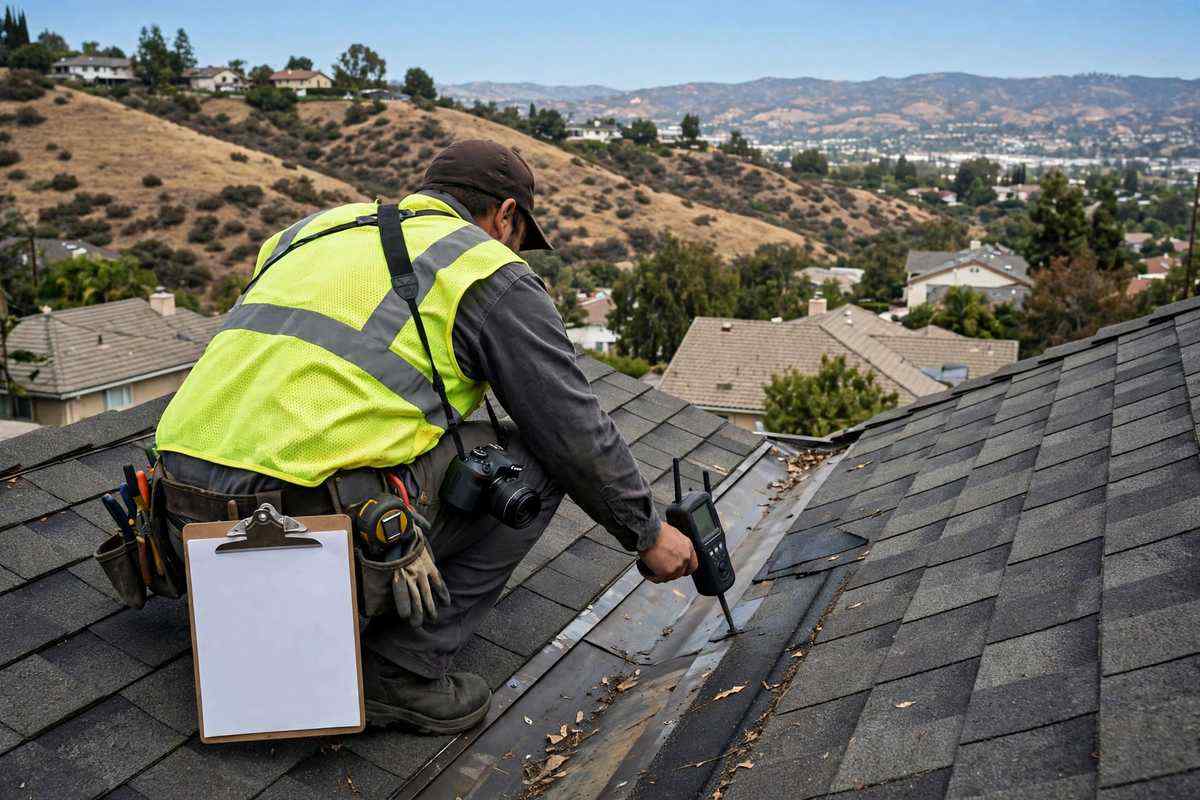
Santa Ana gusts in Simi Valley have been recorded at 62 mph, as on 4-5 October 2013.
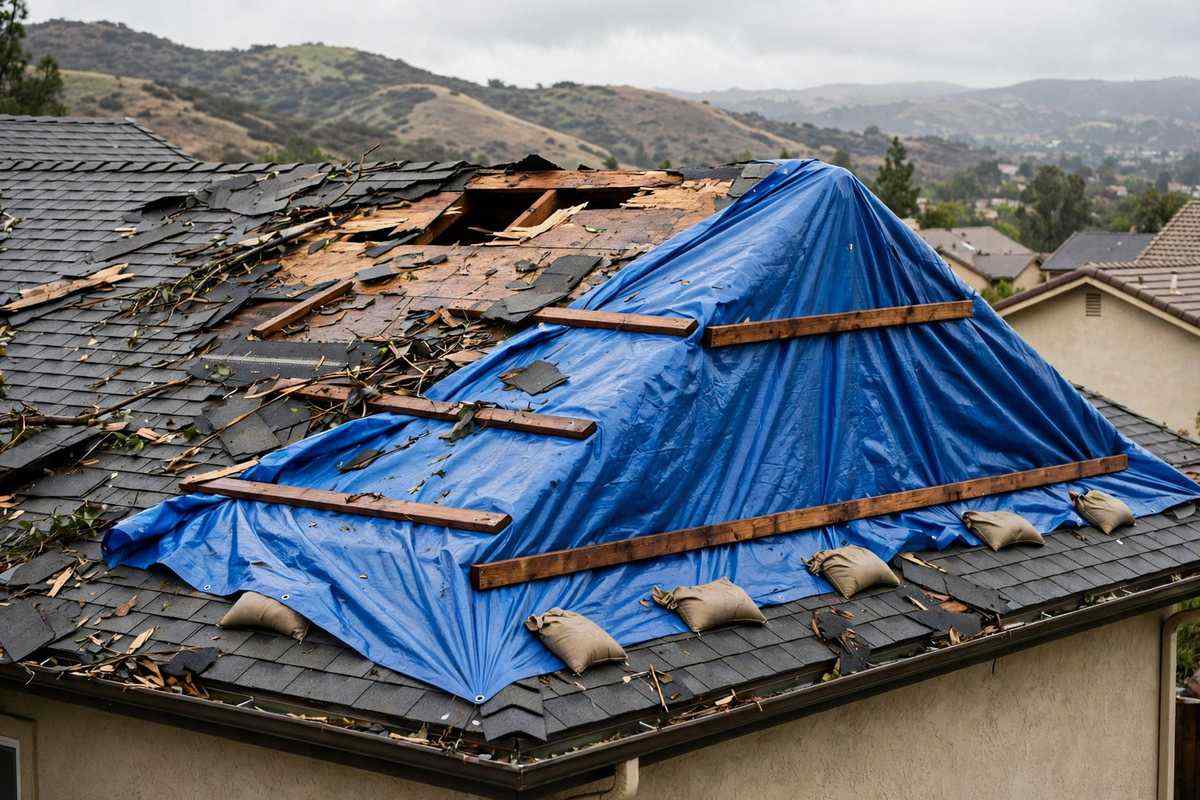
Flashing is where most Simi Valley roofs leak first: valleys, wall intersections, chimneys, skylight curbs, vents and pipe boots.
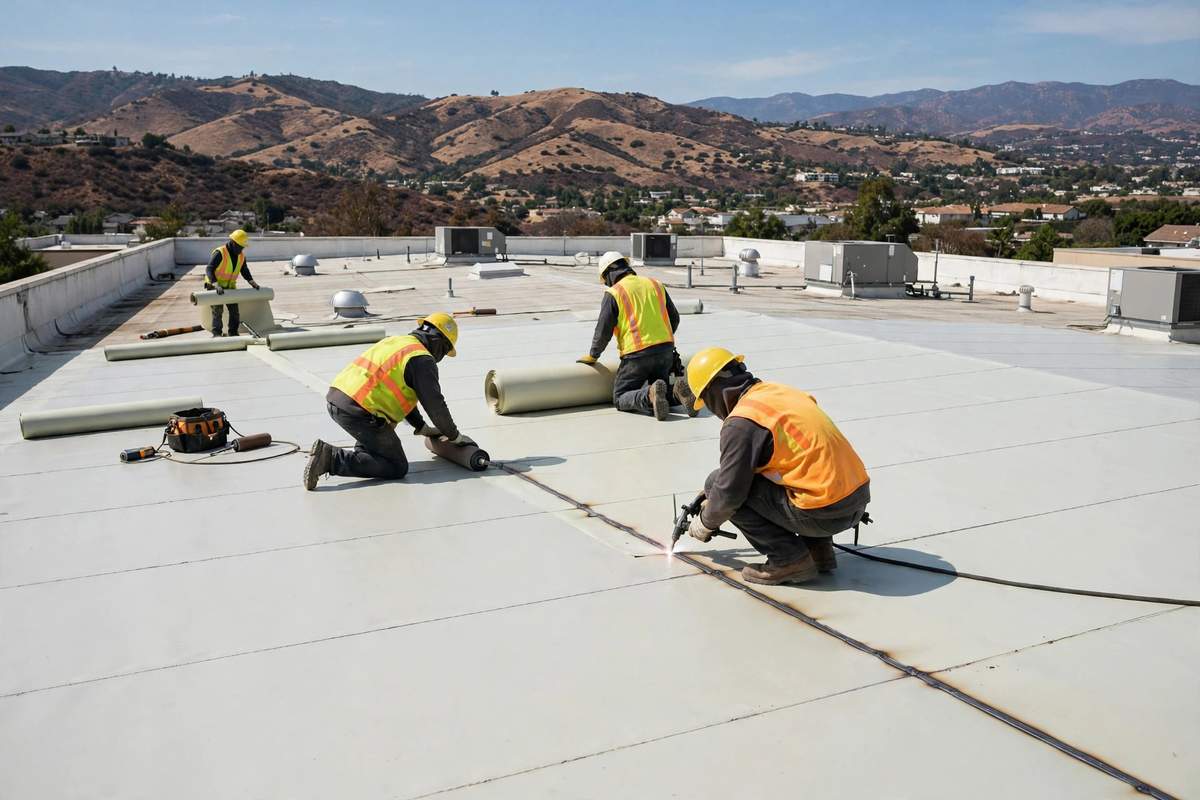
The covering can be sound while the flashing has opened, cracked or been caulked over.
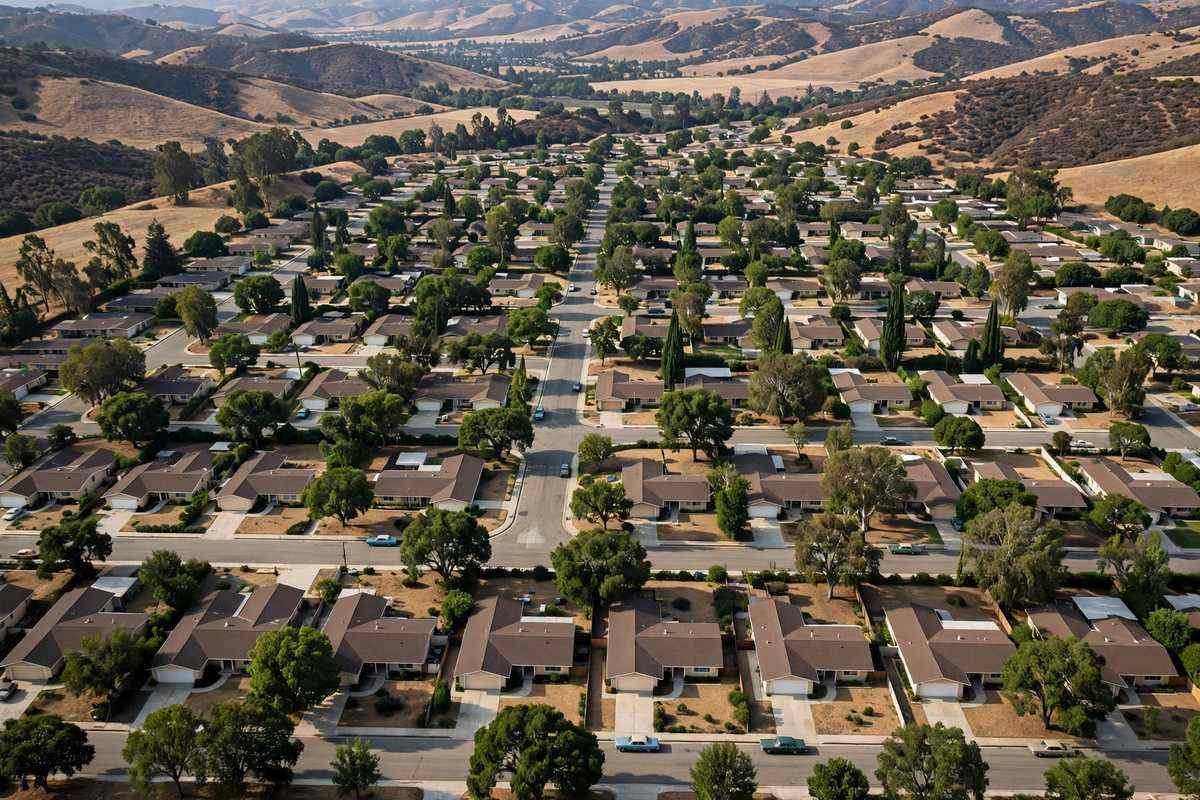
Flashing repair means replacing the metal and the seal, in the correct sequence with the covering, not smearing sealant over the joint.
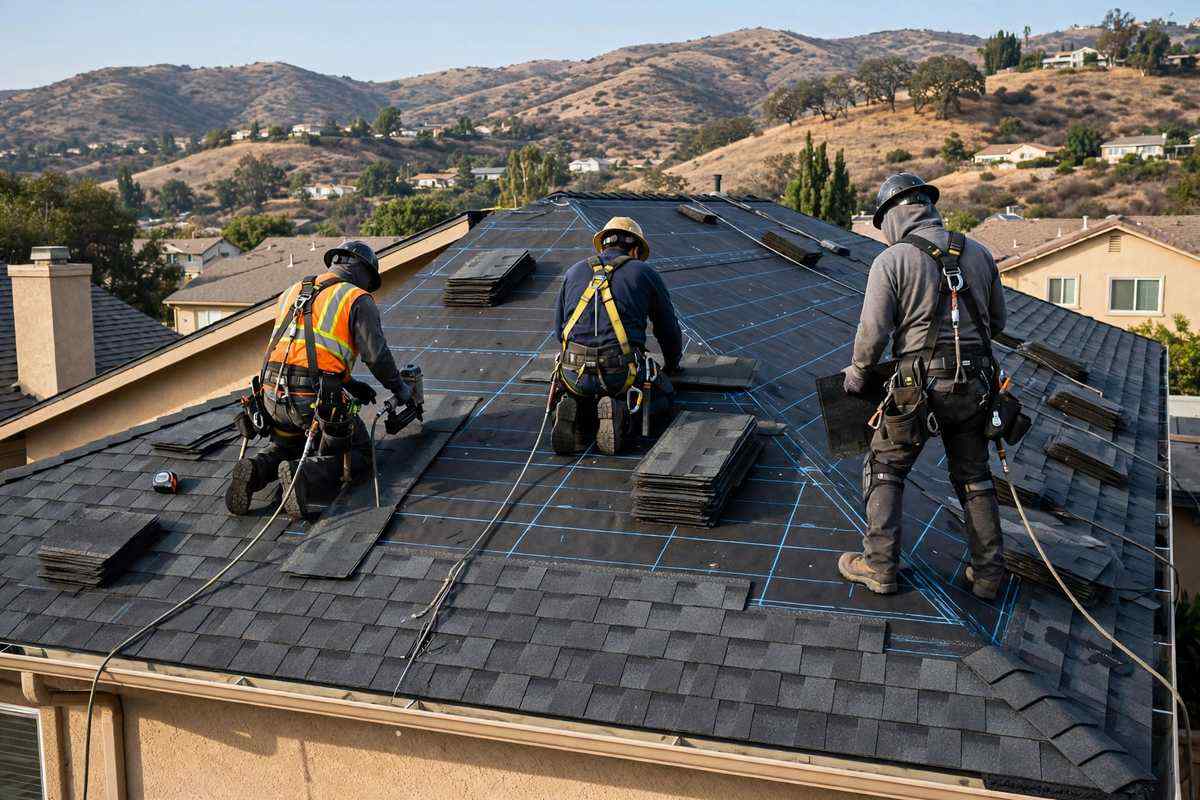
The sequence matters because water must be directed out and down at every step, not trapped behind a new layer.
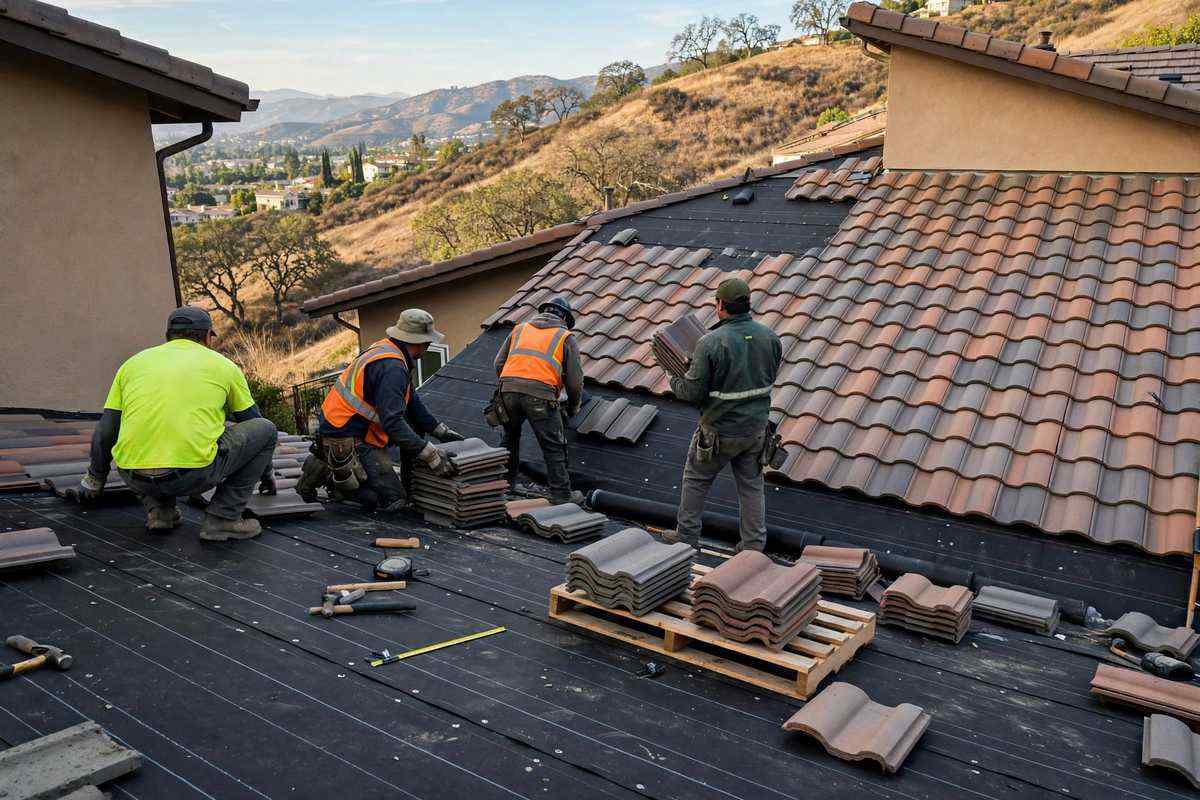
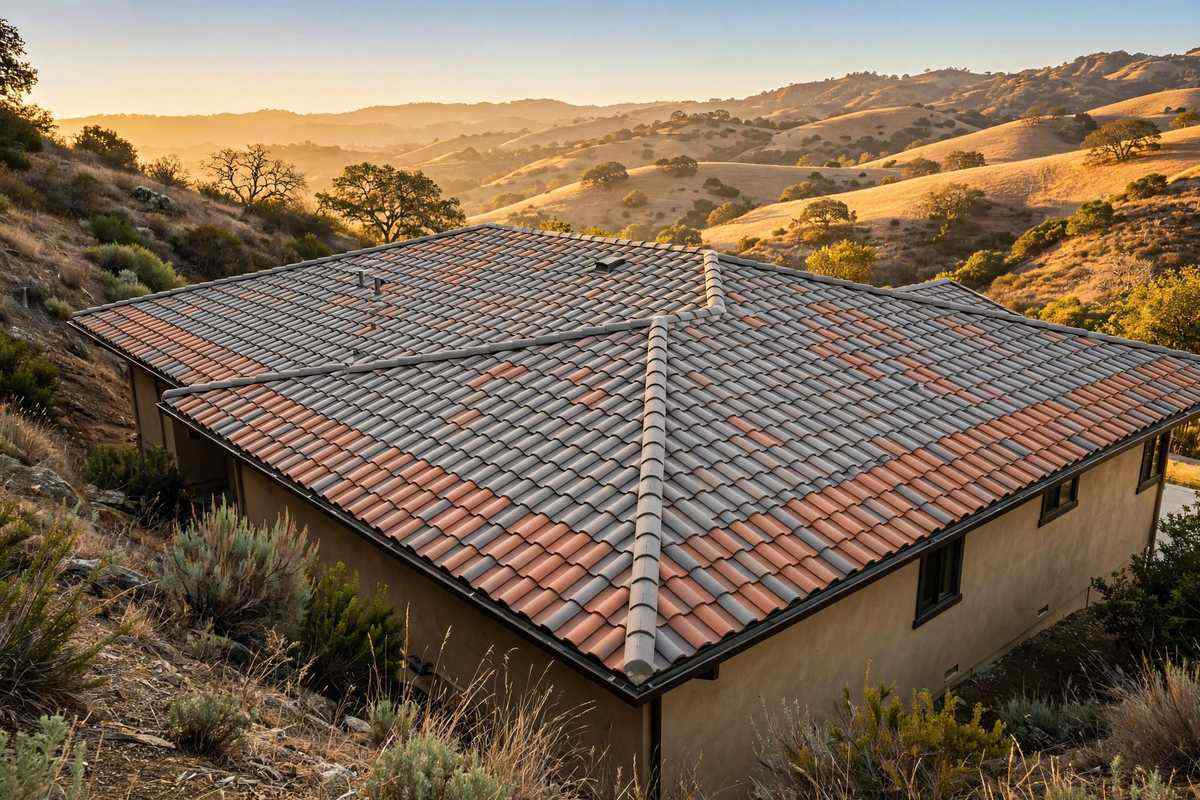
On a tile roof, flashing repair often goes with underlayment work, because the flashing and the underlayment fail on similar timescales.
Both are inspected together before a scope is written.
Work is planned around Simi Valley heat, winter rain and Santa Ana wind.
Published regional market ranges include architectural asphalt at $550 to $900 per square and tile re-lay at $900 to $1,600 per square in a Torrance / South Bay 2026 guide, and California repair work most commonly at $450 to $3,200 in a Modernize guide updated 26 August 2026.
One square is 100 square feet of roof surface, not floor area, and a written estimate follows inspection of the actual roof.
Flashing is where most Simi Valley roofs leak first: valleys, wall intersections, chimneys, skylight curbs, vents and pipe boots. The covering can be sound while the flashing has opened, cracked or been caulked over.
Most Simi Valley homes were built in the 1960s and the 1980s, with a median construction year in the late 1970s.
A large share of roofs therefore sit on homes 35 to 65 years old, at or beyond a first or second re-roof cycle on age grounds alone, so each roof still needs its own inspection.
Roof demand in Simi Valley is driven by inland heat and ultraviolet exposure, concentrated winter rain, and Santa Ana wind, not by snow.
Rain is strongly winter-concentrated and summers are essentially dry, so valleys, flashings and drains sit dry and collect debris for months and are then tested in a handful of winter storms.
Santa Ana gusts in Simi Valley have been recorded at 62 mph, as on 4-5 October 2013.
Flashing is where most Simi Valley roofs leak first: valleys, wall intersections, chimneys, skylight curbs, vents and pipe boots.
The covering can be sound while the flashing has opened, cracked or been caulked over.
Flashing repair means replacing the metal and the seal, in the correct sequence with the covering, not smearing sealant over the joint.
The sequence matters because water must be directed out and down at every step, not trapped behind a new layer.
Simi Valley is an ageing tract re-roof market, not a new-construction market. Most Simi Valley homes were built in the 1960s and the 1980s, with a median construction year in the late 1970s. A large share of roofs therefore sit on homes 35 to 65 years old, at or beyond a first or second re-roof cycle on age grounds alone, so each roof still needs its own inspection.
Both are inspected together before a scope is written.
Your roof is checked as a whole system: deck, underlayment, flashing and drainage.
Published regional market ranges include architectural asphalt at $550 to $900 per square and tile re-lay at $900 to $1,600 per square in a Torrance / South Bay 2026 guide, and California repair work most commonly at $450 to $3,200 in a Modernize guide updated 26 August 2026.
One square is 100 square feet of roof surface, not floor area, and a written estimate follows inspection of the actual roof.
Simi Valley is an ageing tract re-roof market, not a new-construction market.
Most Simi Valley homes were built in the 1960s and the 1980s, with a median construction year in the late 1970s.
A large share of roofs therefore sit on homes 35 to 65 years old, at or beyond a first or second re-roof cycle on age grounds alone, so each roof still needs its own inspection.
Roof demand in Simi Valley is driven by inland heat and ultraviolet exposure, concentrated winter rain, and Santa Ana wind, not by snow.
Flashing repair means replacing the metal and the seal, in the correct sequence with the covering, not smearing sealant over the joint. The sequence matters because water must be directed out and down at every step, not trapped behind a new layer.
On a tile roof, flashing repair often goes with underlayment work, because the flashing and the underlayment fail on similar timescales. Both are inspected together before a scope is written.
These are published Oct-2026 regional market ranges, not Treggo Lume prices. A written estimate follows inspection.
Published regional market ranges include architectural asphalt at $550 to $900 per square and tile re-lay at $900 to $1,600 per square in a Torrance / South Bay 2026 guide, and California repair work most commonly at $450 to $3,200 in a Modernize guide updated 26 August 2026. One square is 100 square feet of roof surface, not floor area, and a written estimate follows inspection of the actual roof.
The covering can be sound while the flashing has opened, cracked or been caulked over.
Flashing repair means replacing the metal and the seal, in the correct sequence with the covering, not smearing sealant over the joint.
The sequence matters because water must be directed out and down at every step, not trapped behind a new layer.
Flashing repair means replacing the metal and the seal, in the correct sequence with the covering, not smearing sealant over the joint. The sequence matters because water must be directed out and down at every step, not trapped behind a new layer.
Both are inspected together before a scope is written.
Call (805) 669-9300 to arrange an inspection and a written estimate.
Published regional market ranges include architectural asphalt at $550 to $900 per square and tile re-lay at $900 to $1,600 per square in a Torrance / South Bay 2026 guide, and California repair work most commonly at $450 to $3,200 in a Modernize guide updated 26 August 2026.
Customer reviews are not published on this website yet. If you would like to discuss a roof in Simi Valley, call Treggo Lume Home Roofers at (805) 669-9300 or visit 1712 Erringer Rd, Simi Valley, CA 93065. A written scope follows inspection of the actual roof.
Roof demand in Simi Valley is driven by inland heat and ultraviolet exposure, concentrated winter rain, and Santa Ana wind, not by snow. Rain is strongly winter-concentrated and summers are essentially dry, so valleys, flashings and drains sit dry and collect debris for months and are then tested in a handful of winter storms. Santa Ana gusts in Simi Valley have been recorded at 62 mph, as on 4-5 October 2013.
A written scope follows inspection of the actual roof, because size, pitch, number of layers, material, access, and permit requirements all change the work. This website does not publish a firm price for this business; published market ranges elsewhere on this site are labelled as market data, not as a quote.
How long the work takes depends on the scope found on inspection: roof size, material, layers to remove, deck repairs, and weather. No completion time is promised on this website; scheduling is arranged by phone after inspection.
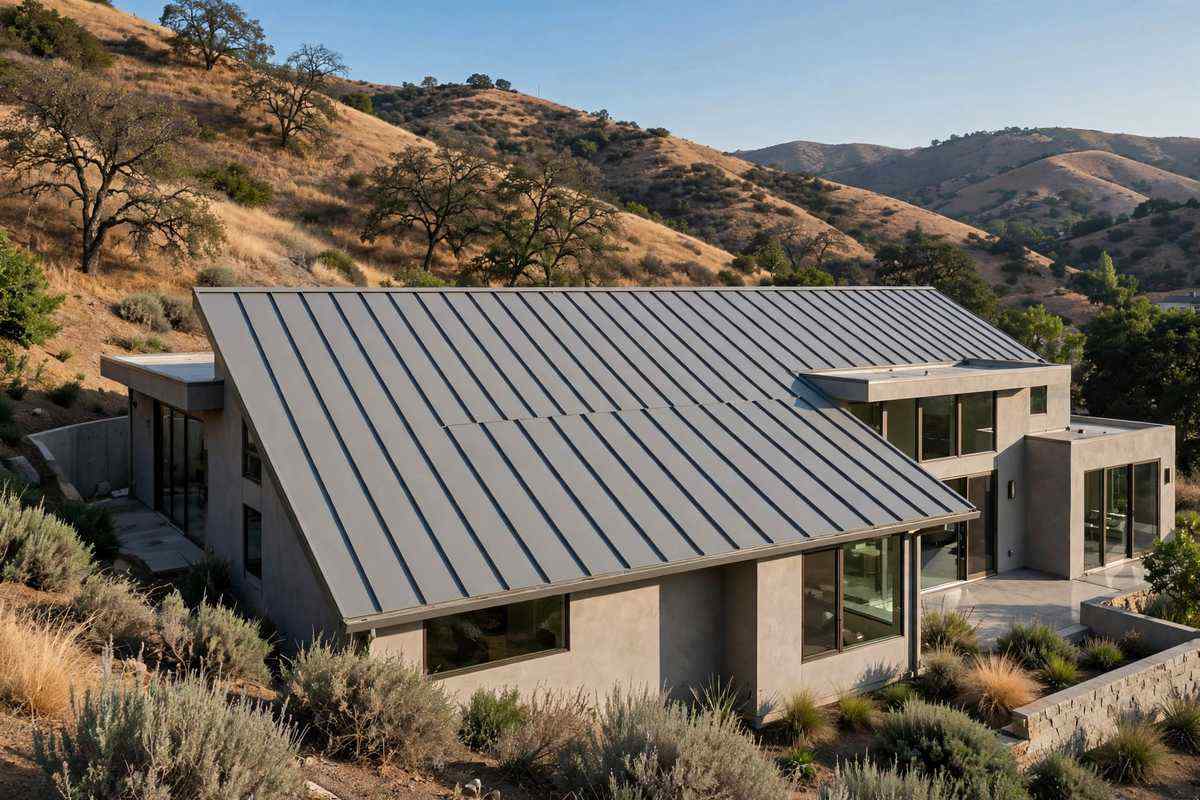
The better choice depends on the house: tract or hillside position, roof pitch, weight the framing can carry, fire-zone status, and ventilation. Compare those factors for the actual roof rather than a single ‘best’ label, and confirm permit and fire-zone requirements for the parcel.
Whether a repair or a full replacement is right depends on what inspection finds: isolated damage can often be repaired, while widespread failure, deck damage, or repeated problems usually point to a larger scope. The written scope after inspection states which it is for the actual roof.
Flashing is where most Simi Valley roofs leak first: valleys, wall intersections, chimneys, skylight curbs, vents and pipe boots. The covering can be sound while the flashing has opened, cracked or been caulked over.
Call Treggo Lume Home Roofers at (805) 669-9300 or visit 1712 Erringer Rd, Simi Valley, CA 93065, to discuss your roof.
On a tile roof, flashing repair often goes with underlayment work, because the flashing and the underlayment fail on similar timescales. Both are inspected together before a scope is written.
(805) 669-9300