
A temporary leak patch in Simi Valley has one job: limit further water entry until a roofer can inspect and repair properly. It is not a permanent repair, and it should not be sold as one.
How to patch a roof leak temporarily before a roofer arrives
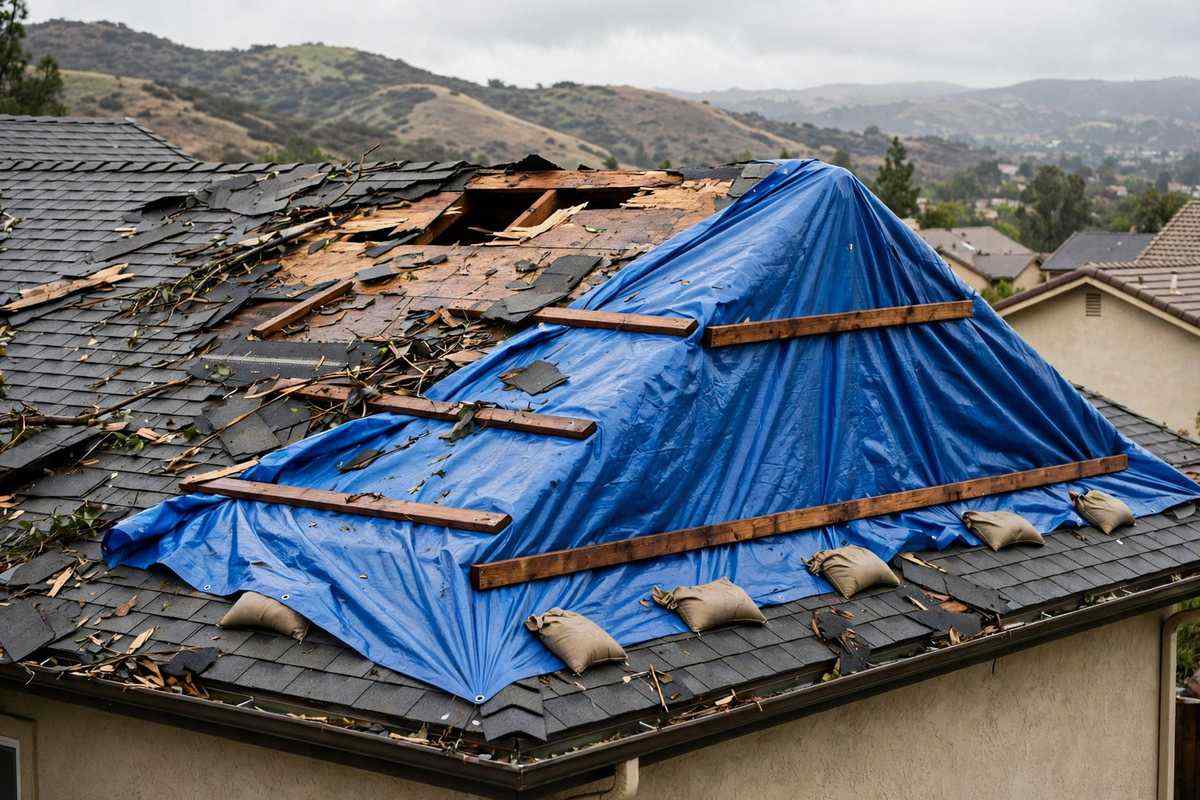
Inside, move belongings, catch drips and photograph the stain and the ceiling. Outside, only work on a dry, safe roof, and never walk a wet tile or steep slope to place a patch. A tarp, secured without new penetrations where possible, is safer than a sealant smear on a wet joint.
Simi Valley contains High and Very High Fire Hazard Severity Zone parcels, but it is not correct to say that all of Simi Valley is Very High. The parcel's zone must be checked in the CAL FIRE / VCFD Fire Hazard Severity Zone viewer, and on a wildland-urban interface parcel the current citation is Title 24 Part 7, the California Wildland-Urban Interface Code, not the retired CBC Chapter 7A. On such a parcel a Class A fire-rated roof assembly is required.
Published regional market ranges include architectural asphalt at $550 to $900 per square and tile re-lay at $900 to $1,600 per square in a Torrance / South Bay 2026 guide, and California repair work most commonly at $450 to $3,200 in a Modernize guide updated 26 August 2026. One square is 100 square feet of roof surface, not floor area, and a written estimate follows inspection of the actual roof.
Why Roof Leaks Happen in Simi Valley
Simi Valley is an ageing tract re-roof market, not a new-construction market. Most Simi Valley homes were built in the 1960s and the 1980s, with a median construction year in the late 1970s. A large share of roofs therefore sit on homes 35 to 65 years old, at or beyond a first or second re-roof cycle on age grounds alone, so each roof still needs its own inspection.
A temporary leak patch in Simi Valley has one job: limit further water entry until a roofer can inspect and repair properly. It is not a permanent repair, and it should not be sold as one.
- UV degradation: Shingles lose their oils and curl at the edges after 10-15 years of direct sun.
- Wind-driven rain: Santa Ana winds push water sideways under shingles and flashing, especially on west-facing slopes.
- Thermal shock: Hot days and cold nights cause wood framing and metal flashing to expand and contract, loosening seals.
Inside, move belongings, catch drips and photograph the stain and the ceiling. Outside, only work on a dry, safe roof, and never walk a wet tile or steep slope to place a patch. A tarp, secured without new penetrations where possible, is safer than a sealant smear on a wet joint.
Call (805) 669-9300 and describe where water is coming in, when it started, and whether it follows rain or wind. That description helps the roofer trace the source, because the stain is rarely above the entry point.
How Do I Temporarily Patch a Roof Leak in Simi Valley CA?
Simi Valley contains High and Very High Fire Hazard Severity Zone parcels, but it is not correct to say that all of Simi Valley is Very High. The parcel's zone must be checked in the CAL FIRE / VCFD Fire Hazard Severity Zone viewer, and on a wildland-urban interface parcel the current citation is Title 24 Part 7, the California Wildland-Urban Interface Code, not the retired CBC Chapter 7A. On such a parcel a Class A fire-rated roof assembly is required.
- Find the leak source. Go into the attic with a flashlight during daylight. Look for water stains, drips, or dark spots on the roof deck. Trace the water up to its highest point-that is usually the entry point.
- Wait for dry conditions. Never climb on a wet roof. If it is still raining, place a bucket under the drip and wait. Safety first.
- Clear the area. Remove debris, dirt, and loose shingle granules around the leak. A clean surface helps the patch stick.
- Apply your patch material. Use a roof patch kit, butyl tape, or roofing cement. Press it firmly into place. For holes up to 3 inches, a peel-and-stick patch works well.
- Seal edges. Cover the patch edges with roofing cement or a quality sealant. This prevents wind from lifting it.
- Test with water. If possible, have someone spray a hose on the roof while you watch from the attic. Check for drips.
Published regional market ranges include architectural asphalt at $550 to $900 per square and tile re-lay at $900 to $1,600 per square in a Torrance / South Bay 2026 guide, and California repair work most commonly at $450 to $3,200 in a Modernize guide updated 26 August 2026. One square is 100 square feet of roof surface, not floor area, and a written estimate follows inspection of the actual roof.
Simi Valley is an ageing tract re-roof market, not a new-construction market. Most Simi Valley homes were built in the 1960s and the 1980s, with a median construction year in the late 1970s. A large share of roofs therefore sit on homes 35 to 65 years old, at or beyond a first or second re-roof cycle on age grounds alone, so each roof still needs its own inspection.
What Can I Use to Patch a Roof Leak in Simi Valley California?
A temporary leak patch in Simi Valley has one job: limit further water entry until a roofer can inspect and repair properly. It is not a permanent repair, and it should not be sold as one.
- Butyl tape: Sticky, waterproof, and easy to mold around flashing. Works on shingle, metal, and tile roofs. Lasts 6-12 months if applied correctly.
- Roofing cement (flashing cement): A thick trowel-grade sealant. Best for small holes and around nails. Cures in a few hours.
- Peel-and-stick patch: A rubberized sheet with adhesive backing. Ideal for flat roofs and emergency repairs. Can last up to 2 years.
- Self-adhering membrane: A heavier option for larger gaps. You may need to cut it to size.
- Plastic sheeting: A last resort for big holes during a storm. Secure it with nails or boards, but expect it to fail in wind.
Inside, move belongings, catch drips and photograph the stain and the ceiling. Outside, only work on a dry, safe roof, and never walk a wet tile or steep slope to place a patch. A tarp, secured without new penetrations where possible, is safer than a sealant smear on a wet joint.
Call (805) 669-9300 and describe where water is coming in, when it started, and whether it follows rain or wind. That description helps the roofer trace the source, because the stain is rarely above the entry point.
Simi Valley contains High and Very High Fire Hazard Severity Zone parcels, but it is not correct to say that all of Simi Valley is Very High. The parcel's zone must be checked in the CAL FIRE / VCFD Fire Hazard Severity Zone viewer, and on a wildland-urban interface parcel the current citation is Title 24 Part 7, the California Wildland-Urban Interface Code, not the retired CBC Chapter 7A. On such a parcel a Class A fire-rated roof assembly is required.
How Long Does a Temporary Roof Patch Last in Simi Valley?
Published regional market ranges include architectural asphalt at $550 to $900 per square and tile re-lay at $900 to $1,600 per square in a Torrance / South Bay 2026 guide, and California repair work most commonly at $450 to $3,200 in a Modernize guide updated 26 August 2026. One square is 100 square feet of roof surface, not floor area, and a written estimate follows inspection of the actual roof.
Simi Valley is an ageing tract re-roof market, not a new-construction market. Most Simi Valley homes were built in the 1960s and the 1980s, with a median construction year in the late 1970s. A large share of roofs therefore sit on homes 35 to 65 years old, at or beyond a first or second re-roof cycle on age grounds alone, so each roof still needs its own inspection.
A temporary leak patch in Simi Valley has one job: limit further water entry until a roofer can inspect and repair properly. It is not a permanent repair, and it should not be sold as one.
Inside, move belongings, catch drips and photograph the stain and the ceiling. Outside, only work on a dry, safe roof, and never walk a wet tile or steep slope to place a patch. A tarp, secured without new penetrations where possible, is safer than a sealant smear on a wet joint.
Common Mistakes to Avoid
Call (805) 669-9300 and describe where water is coming in, when it started, and whether it follows rain or wind. That description helps the roofer trace the source, because the stain is rarely above the entry point.
Simi Valley contains High and Very High Fire Hazard Severity Zone parcels, but it is not correct to say that all of Simi Valley is Very High. The parcel's zone must be checked in the CAL FIRE / VCFD Fire Hazard Severity Zone viewer, and on a wildland-urban interface parcel the current citation is Title 24 Part 7, the California Wildland-Urban Interface Code, not the retired CBC Chapter 7A. On such a parcel a Class A fire-rated roof assembly is required.
- Patching a wet surface. Adhesive will not stick. Wait for dry weather or use a product designed for wet application.
- Using too little sealant. More is better around edges. Wind gets under thin spots.
- Ignoring safety. Falling off a ladder is far worse than a leak. If you are unsure, stay off the roof.
- Not checking the attic. You need to see where the water is coming in, not just where it drips.
- Forgetting to remove debris. Leaves and twigs create dams that force water under shingles.
Published regional market ranges include architectural asphalt at $550 to $900 per square and tile re-lay at $900 to $1,600 per square in a Torrance / South Bay 2026 guide, and California repair work most commonly at $450 to $3,200 in a Modernize guide updated 26 August 2026. One square is 100 square feet of roof surface, not floor area, and a written estimate follows inspection of the actual roof.
Simi Valley is an ageing tract re-roof market, not a new-construction market. Most Simi Valley homes were built in the 1960s and the 1980s, with a median construction year in the late 1970s. A large share of roofs therefore sit on homes 35 to 65 years old, at or beyond a first or second re-roof cycle on age grounds alone, so each roof still needs its own inspection.
When to Call a Professional
A temporary leak patch in Simi Valley has one job: limit further water entry until a roofer can inspect and repair properly. It is not a permanent repair, and it should not be sold as one.
Inside, move belongings, catch drips and photograph the stain and the ceiling. Outside, only work on a dry, safe roof, and never walk a wet tile or steep slope to place a patch. A tarp, secured without new penetrations where possible, is safer than a sealant smear on a wet joint.
Call (805) 669-9300 and describe where water is coming in, when it started, and whether it follows rain or wind. That description helps the roofer trace the source, because the stain is rarely above the entry point.
Frequently Asked Questions
How do I temporarily patch a roof leak in Simi Valley CA?
Simi Valley contains High and Very High Fire Hazard Severity Zone parcels, but it is not correct to say that all of Simi Valley is Very High. The parcel's zone must be checked in the CAL FIRE / VCFD Fire Hazard Severity Zone viewer, and on a wildland-urban interface parcel the current citation is Title 24 Part 7, the California Wildland-Urban Interface Code, not the retired CBC Chapter 7A. On such a parcel a Class A fire-rated roof assembly is required.
What can I use to patch a roof leak in Simi Valley California?
Published regional market ranges include architectural asphalt at $550 to $900 per square and tile re-lay at $900 to $1,600 per square in a Torrance / South Bay 2026 guide, and California repair work most commonly at $450 to $3,200 in a Modernize guide updated 26 August 2026. One square is 100 square feet of roof surface, not floor area, and a written estimate follows inspection of the actual roof.
How long does a temporary roof patch last in Simi Valley?
Simi Valley is an ageing tract re-roof market, not a new-construction market. Most Simi Valley homes were built in the 1960s and the 1980s, with a median construction year in the late 1970s. A large share of roofs therefore sit on homes 35 to 65 years old, at or beyond a first or second re-roof cycle on age grounds alone, so each roof still needs its own inspection.
Should I patch my roof before a roofer arrives in Simi Valley CA?
A temporary leak patch in Simi Valley has one job: limit further water entry until a roofer can inspect and repair properly. It is not a permanent repair, and it should not be sold as one.
Can I use Flex Seal on a roof leak?
Inside, move belongings, catch drips and photograph the stain and the ceiling. Outside, only work on a dry, safe roof, and never walk a wet tile or steep slope to place a patch. A tarp, secured without new penetrations where possible, is safer than a sealant smear on a wet joint.
Get Help with Roofing in Simi Valley
Call (805) 669-9300 and describe where water is coming in, when it started, and whether it follows rain or wind. That description helps the roofer trace the source, because the stain is rarely above the entry point.
Simi Valley contains High and Very High Fire Hazard Severity Zone parcels, but it is not correct to say that all of Simi Valley is Very High. The parcel's zone must be checked in the CAL FIRE / VCFD Fire Hazard Severity Zone viewer, and on a wildland-urban interface parcel the current citation is Title 24 Part 7, the California Wildland-Urban Interface Code, not the retired CBC Chapter 7A. On such a parcel a Class A fire-rated roof assembly is required.